Goldenrod for Sinus Congestion: Meet the Plant

Goldenrod for sinus congestion: Solidago canadensis in full bloom in late summer.
Goldenrod for sinus congestion is a traditional use that surprises most people. Across North America this plant carries a reputation as an allergy villain. However, goldenrod does not cause hay fever. Its pollen is heavy and sticky, so insects move it rather than the wind. In fact, the real culprit blooming beside it in August is ragweed.
A daisy-family plant with a long record
Goldenrod (Solidago canadensis) sits in the Asteraceae family, the same broad group behind chamomile, calendula, and yarrow. Its genus name traces to the Latin solidare, meaning to make whole. That name reflects an old reputation as a wound herb. Although roughly a hundred Solidago species grow across the northern hemisphere, Canada goldenrod is the one herbalists harvest most often here.
Where to find it
You have almost certainly walked past it. From late July through September it takes over roadsides, ditches, old fields, and railway edges across Ontario. Plumes of tiny golden flowers top stems that reach one to two metres. Meanwhile the leaves run lance-shaped, with fine teeth along the margins. Crush the plant and you catch a faint anise-like scent.
Here’s why that matters: goldenrod counts among the few genuinely abundant medicinal plants in this region. As a result, it harvests sustainably and costs little to work with. Few respiratory or urinary herbs can claim that. Traditionally, herbalists gathered the flowering tops as the buds opened, before the heads went to seed.
Traditional use of goldenrod for sinus congestion
The history runs long. Indigenous peoples across North America used various Solidago species as a wash for wounds and sores. They also drank the tea for colds and kidney complaints. European settlers, meanwhile, recognised a close relative of their own goldenrod (Solidago virgaurea). Because that species appears in herbals from the sixteenth century for urinary gravel, the use carried over easily. Even today, Germany approves goldenrod for irrigation therapy of the urinary tract.
The old common names tell the same story: woundwort, Aaron’s rod, and blue mountain tea. Colonial Americans drank it as an everyday beverage. Taken together, those two threads make goldenrod for sinus congestion worth a closer look.
How Goldenrod for Sinus Congestion Works
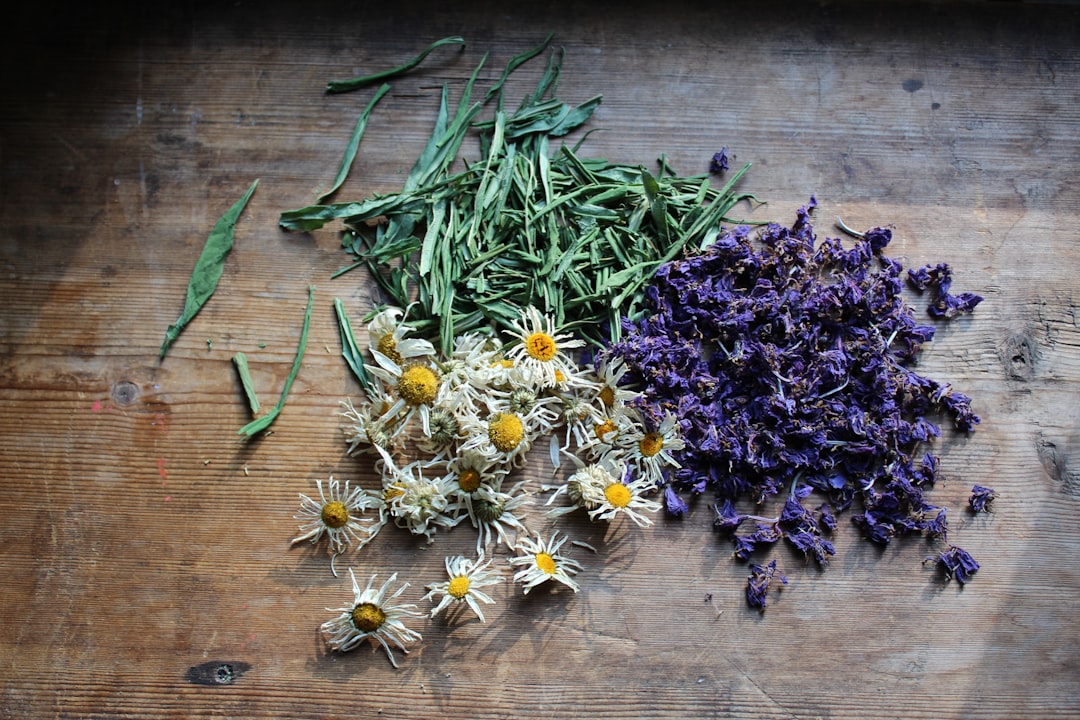
Goldenrod for sinus congestion uses the dried flowering tops.
The traditional case for goldenrod for sinus congestion rests on two actions. First, goldenrod works as an astringent. Second, it works as a decongestant for mucous membranes. In practical terms, therefore, it tones tissue that has turned boggy and over-productive. That describes the sinuses during a lingering cold or a damp allergic flare.
Actions and system affinities
Classical Western herbal texts record goldenrod’s primary action as antimicrobial. Secondary actions cover decongestant, expectorant, and vulnerary (wound-healing) effects. Furthermore, its system affinities run to the respiratory tract and the urinary tract. As a result, herbalists have traditionally associated it with upper respiratory infections and urinary tract infections.
The constituents behind goldenrod for sinus congestion
The chemistry supports the tradition reasonably well. Goldenrod carries four constituent groups of interest:
- Flavonoids, including rutin, quercetin, and kaempferol
- Saponins, with mild diuretic and antifungal activity
- Tannins, the astringent fraction
- Volatile oils, which carry the aromatic character
Here’s how it works: tannins bind loosely to the surface proteins of an inflamed membrane and tighten it. Consequently, watery discharge settles without the tissue drying out. Meanwhile, researchers have studied rutin and quercetin for their effect on capillary integrity. Both also appear to moderate histamine release from mast cells. That pairing explains why goldenrod turns up in old formulas for a streaming nose.
The urinary side
But there’s more to it than the sinuses. Saponins and flavonoids together give goldenrod a gentle diuretic effect. For that reason, German phytotherapy uses it to raise urine flow as a flushing therapy. In other words, one plant reaches two systems that rarely share a remedy. If urinary support interests you more, our guide to uva ursi for urinary tract health covers the other half of that picture.
The key takeaway: goldenrod is a tonifying, drying, mildly antimicrobial herb with an aromatic edge. Since it neither sedates nor stimulates, it combines easily. Traditionally, goldenrod pairs well with sage (Salvia officinalis) for congestive infections of the lungs or urinary tract. And where goldenrod is unavailable, yarrow (Achillea millefolium) stands as the closest substitute.
Taking Goldenrod for Sinus Congestion: Forms and Preparation

Old fields and meadows are goldenrod’s natural habitat.
Goldenrod for sinus congestion comes in two main forms, and your choice depends on what you want from it. The tincture concentrates the flavonoid and tannin fraction, and it keeps for years. By contrast, the tea delivers a volume of warm fluid alongside the herb. That volume suits a flushing approach to the urinary tract better than drops do.
Tincture and tea
Most people take the tincture in water, a little before or between meals. The taste runs astringent and faintly aromatic, closer to green tea than to a bitter. For tea, steep the dried flowering tops covered for ten to fifteen minutes. Keeping the lid on holds the volatile oils in the cup. Colonial Americans drank goldenrod as an everyday beverage, so it tastes better than most respiratory herbs.
For liability and regulatory reasons we do not make dosing recommendations. Consequently, if you want a specific amount for a specific situation, work with a herbalist or naturopathic doctor.
Cautions worth knowing
A few practical notes matter here. Goldenrod sits in the Asteraceae family, so anyone with a known daisy-family sensitivity should approach it carefully. In addition, flushing therapies that raise urine output do not suit anyone advised to restrict fluids. Cardiac or kidney insufficiency is the usual reason for that advice. Finally, check with a practitioner first if you are pregnant, breastfeeding, or taking prescription medication.
What goldenrod combines with
Goldenrod blends easily. For instance, herbalists have long put it alongside mullein where a cough turns productive. Others pair it with nettle through allergy season, since the astringency and the antihistamine action complement each other.
We make our goldenrod tincture by the classic tincturing method at a 1:5 ratio. That ratio gives a full extraction of the flowering tops. In addition, we set the alcohol percentage for the aromatic and flavonoid content of this plant part. A third-party lab tests every batch, and our herbalists then assess it organoleptically before final bottling. For anyone who prefers the cup to the dropper, we stock the dried herb as well.
One last point deserves repeating, because the myth is stubborn. Goldenrod is not the reason your eyes itch in September. Instead, it simply flowers in bright yellow beside ragweed, which flowers in inconspicuous green and does the actual damage.
FAQ
- Superior Sourcing: Our herbs are sourced from all over the world to avoid seasonal fluctuations in availability, keeping herbs accessible. Our suppliers meet strict standards that ensure top quality herbs, most of which are organic, wildcrafted, sustainably grown, or grown using permaculture. We support local farmers and grow many of our own herbs.
- Superior Processing: Our tinctures are made using the classic tincturing method. The tinctures are made in a 1:5 ratio which allows for the optimal extraction of the herb. The alcohol percentage is strictly controlled depending on the herb and part of the plant that is used.
- Superior Selection: We take pride in our growing selection of over 300 individual herbs. If we don’t carry the herb you’re seeking, we can likely track it down for you.
- Superior Quality Control: Our tinctures are thoroughly tested by a third-party lab and with an organoleptic evaluation by our team of herbalists prior to final bottling.
- Superior Price: Our tinctures are more cost-effective than other tinctures on the market. With an eye towards efficiency, we keep our costs low by maintaining good relationships with our wide network of suppliers and ordering herbs in bulk quantities.
- We Care About the Environment: We repackage materials that are shipped to us (so don’t be surprised if our packages look different from time to time!). We recycle or reuse materials whenever possible. We turn the cardboard we receive from other suppliers into packing material. We donate to avoid waste to groups like Naturopaths Without Borders. Our workforce almost completely uses public transportation or bikes. We are powered using 100% renewable energy through Bullfrog Power.
- We Donate To Charity: We support many causes that make the world better. We donate a portion of our profits or products. These include charities that support environmental and natural sustainability.
Set up an online account and order through the website. If you don’t have an account and place an order, one will be created for you.
Click here to subscribe to our mailing list.
Our products are made in Toronto, Ontario, Canada by a team of Herbalists and Naturopathic Doctors. The herbs and ingredients we use to make our products are sourced both locally and globally to keep herbs accessible and sustainable.
The majority of our herbs are certified organic, sustainably wildcrafted, or come from small-scale local organic farms that do not yet have organic certification. We always do our best to provide organic herbs in your formulas. We work with a variety of suppliers to keep costs low.
Although most of our products do not contain gluten, we do not have gluten-free certification for our production facility. Feel free to ask about any specific products and we’ll share whatever information we have available.
For liability and regulatory reasons, we don’t make any claims as to how our herbs should be used, including dosing recommendations. Please review our disclaimer, as well as our terms and policies.