Dong Quai for Menstrual Health: Meet the Root
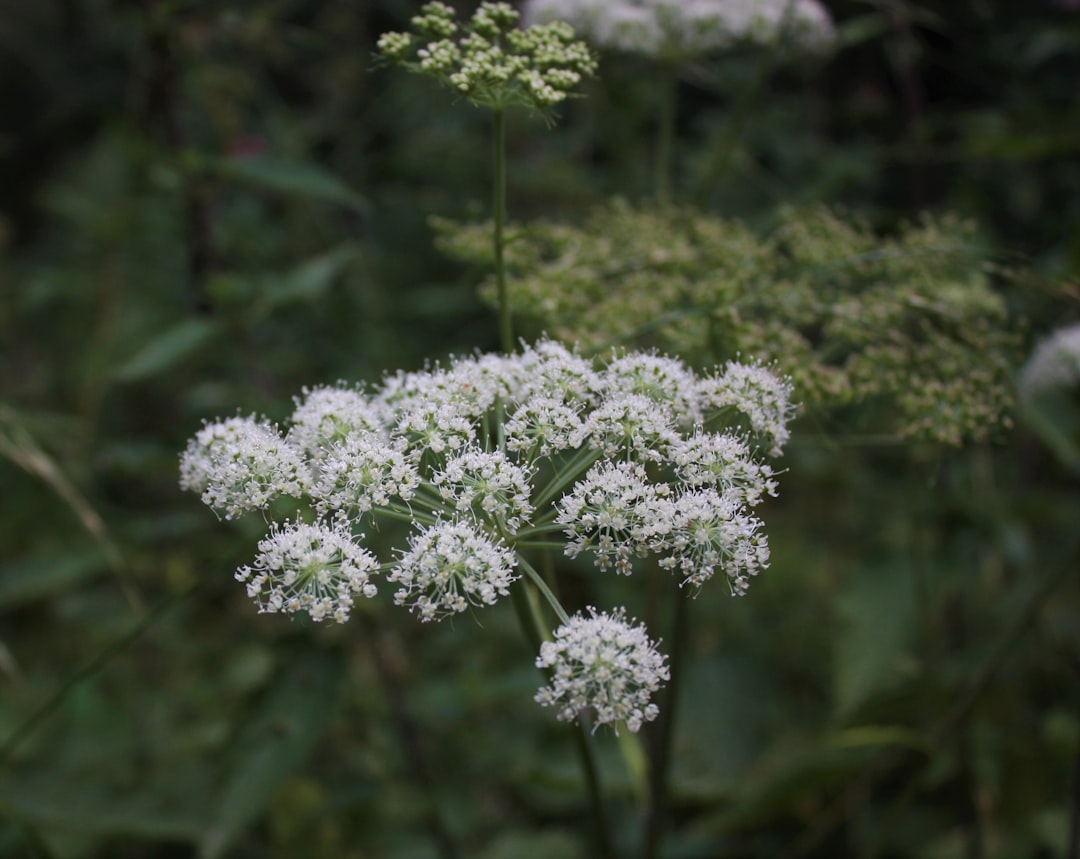
Angelica sinensis in flower, the botanical source of dong quai for menstrual health.
Dong quai for menstrual health has held a place in Chinese herbal practice for more than a thousand years, and it still appears in more women’s formulas than almost any other root. Herbalists sometimes call it female ginseng, though that nickname undersells it. Above all, this is a blood-building root with a long and well-documented history.
Where Angelica Sinensis Grows
The plant behind the powder is Angelica sinensis, a member of the carrot family. Consequently it looks a lot like its cousins: tall hollow stems, feathery divided leaves, and wide umbrella-shaped clusters of small white flowers. It grows in the cool, damp highlands of Gansu, Yunnan and Sichuan, usually between 2,000 and 3,000 metres above sea level. Growers leave the plant in the ground for two or three years, then lift the roots in autumn once the aromatic oils have concentrated.
Here is why that matters: the root is the only part used. A mature root is thick, pale brown and heavily branched, with a sweet celery-like smell. The taste runs sweet first, then slightly bitter, then warm. Graders sort roots by size and oil content, because those oils carry much of the herb’s character.
Dong Quai for Menstrual Health in the Classical Record
You will also see this herb written as dang gui, tang kuei or Chinese angelica. Classical Chinese texts describe the root as sweet, pungent and warm, entering the Liver, Heart and Spleen channels. In other words, traditional practitioners reached for dong quai for menstrual health, for signs of blood deficiency, and for dryness anywhere in the body.
The written record goes back a long way. Dong quai appears in the Shennong Bencao Jing, compiled around the first or second century, and by the Han dynasty it had settled into the blood-tonic category where it still sits. Physicians of that era used it for what they described as thin or stagnant blood, and they noticed early on that the same root both moved blood and nourished it. That double action explains why it turns up in formulas for opposite-looking problems: sluggish, painful periods on one hand and depleted, scanty ones on the other.
Western herbalists picked the root up much later, largely through twentieth-century interest in Chinese formulas. Meanwhile, in China it never left. It anchors Si Wu Tang and Dang Gui Bu Xue Tang, two of the oldest surviving blood-nourishing formulas, and it also shows up in Xiao Yao San and Ba Zhen Tang. Both remain in daily use today.
Benefits and Properties of Dong Quai Root
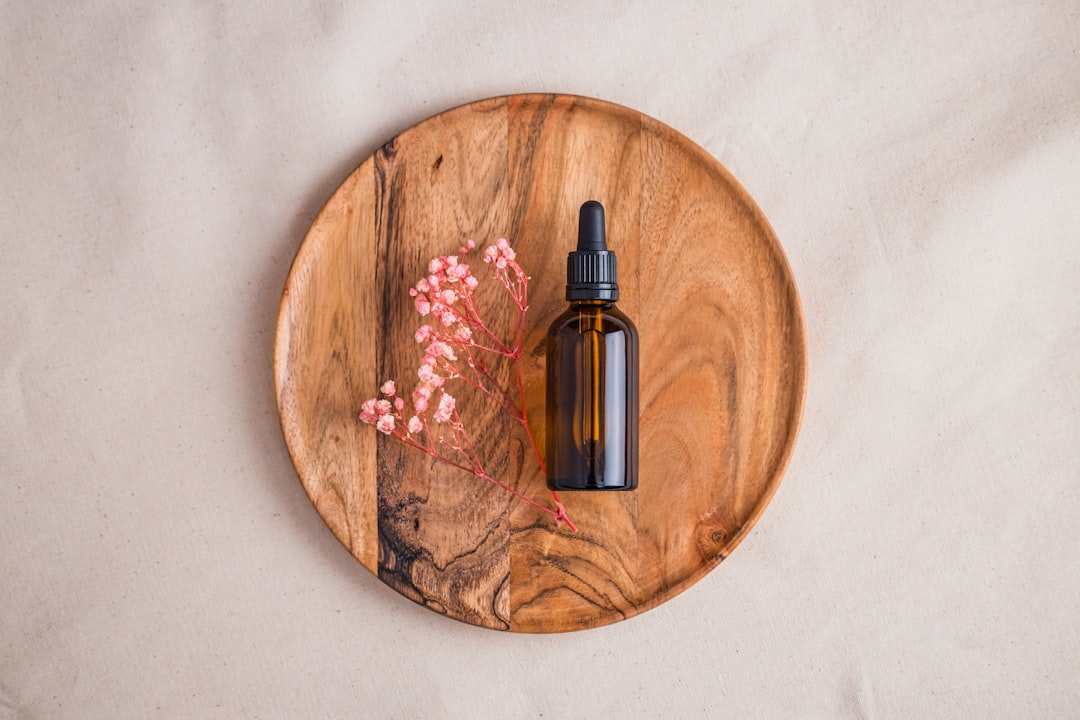
Alcohol extraction captures the oil-soluble fraction of a dense, aromatic root.
So what makes this root worth its reputation? The traditional answer is straightforward. Practitioners classify dong quai as a blood tonic, and they reach for it when someone shows the classic signs of blood deficiency: pale complexion, dry skin, dizziness on standing, scant periods and a general sense of running on empty.
The Constituents Behind Dong Quai for Menstrual Health
Modern analysis has identified several groups of compounds in the root. Ferulic acid and the phthalides, of which ligustilide is the best studied, account for most of the aromatic fraction. In addition, the root carries polysaccharides, plant sterols, coumarins and a surprising amount of vitamin B12 for a plant material. As a result, dong quai for menstrual health is usually discussed as a whole-root effect rather than a single-molecule story.
Ligustilide draws most of the research attention. Laboratory work associates it with smooth-muscle relaxation, which lines up neatly with the traditional use of the root for cramping and dragging periods. Furthermore, researchers have studied the polysaccharide fraction for its effect on red blood cell production. That finding matches the classical blood-building description more closely than you might expect.
This is where it gets interesting. Many sources label dong quai phytoestrogenic, but the evidence is muddier than the label suggests. The root does contain compounds that interact with estrogen receptors, yet studies measuring hormonal markers have produced mixed results. Consequently, careful herbalists describe dong quai for menstrual health as circulatory and nourishing rather than hormonal.
What Herbalists Traditionally Use It For
Traditional practice has associated the root with:
- Scant, late or irregular periods
- Cramping and dragging pelvic discomfort
- Recovery after blood loss, childbirth or illness
- Cold hands and feet, and sluggish peripheral circulation
- Dry skin, brittle nails and thinning hair linked to depletion
- Constipation caused by dryness rather than weak digestion
That last point surprises people. Because the root is oily and moistening, classical texts used it to lubricate the bowel as well as the womb. However, that same oiliness makes it a poor fit for anyone already dealing with loose stools or heavy, damp digestion.
Cautions Worth Knowing
A few cautions belong alongside any discussion of dong quai for menstrual health. The root has blood-moving properties, so anyone taking anticoagulant medication should speak with a practitioner first. Additionally, traditional practice avoids the root during pregnancy and during heavy menstrual flow. Finally, the coumarins and furanocoumarins it contains can increase sun sensitivity in some people.
How to Use Dong Quai for Menstrual Health
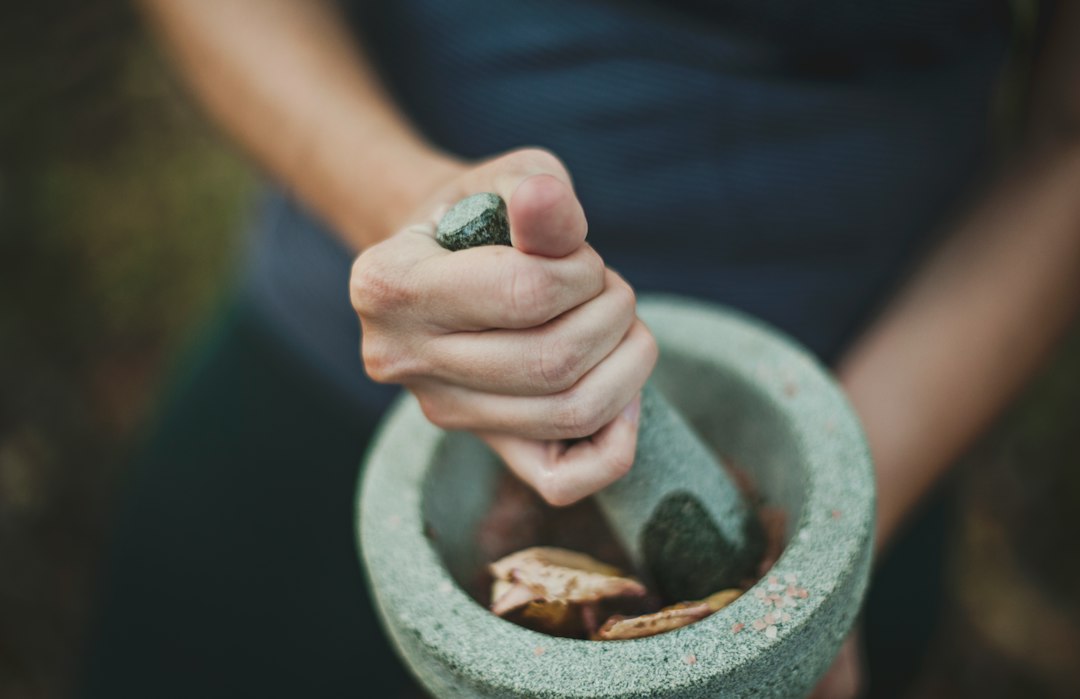
Woody roots need grinding and a long simmer, not a quick steep.
Dong quai reaches people in three main forms: a tincture, a decoction, and dried root slices simmered into soup. Each has a place, and the right choice usually comes down to how long someone plans to use the root.
Tincture, Decoction or Soup
Here is how it works with tinctures. Alcohol pulls the aromatic oils and phthalides out of a dense root efficiently, so a tincture captures the fraction that water alone struggles to reach. Our dong quai tincture uses a 1:5 ratio, with the alcohol percentage set for an oil-rich root rather than a leaf or a flower. A dropper also makes it easy to build the root into a custom blend with other herbs.
Decoctions work differently. Because the root is woody, a quick steep barely touches it. Traditional preparation calls for a slow simmer of twenty to forty minutes, which draws out the polysaccharides and the sweeter, more nourishing fraction. Cooks across northern China take the same approach with food: they drop a few slices of dang gui into chicken broth alongside astragalus and red dates, then let it cook down for an hour. That is arguably the oldest and gentlest way to use dong quai for menstrual health.
Herbs That Pair Well With Dong Quai
The root rarely travels alone. Traditional formulas combine it with herbs that cover its weak spots:
- Astragalus and reishi for deeper blood and energy building
- Peony and rehmannia in the classic Si Wu Tang pattern
- Cramp bark or chaste tree berry in Western cycle-support formulas
- Ginger or cinnamon to warm digestion and offset the root’s oiliness
Timing matters as well. Many practitioners use blood-building herbs in the week after a period rather than during it, since dong quai moves blood and may increase flow. Consequently, cycle-aware scheduling is common: the root goes in during the follicular phase and comes out before bleeding starts.
How We Source and Test the Root
Sourcing matters more with this root than with most. Much of its value sits in the volatile oil content, and that content falls as the root ages, dries out or sits in warehouse storage. We buy Angelica sinensis from suppliers who can document harvest year and growing region. Then our herbalists check every batch organoleptically, smelling and tasting the material before it goes near a tincture press. Additionally, every finished tincture goes to a third-party lab for testing.
Good material tells you what it is. Fresh dong quai root smells unmistakably of sweet celery and warm earth, and a slice snapped in half shows a pale, slightly oily cut surface rather than a dry, chalky one. Faded colour and a flat smell usually mean old stock. Because of that, we buy in smaller, more frequent lots instead of warehousing a year of root at a time.
The key takeaway: anyone using dong quai for menstrual health should treat it as a long-game herb. It builds rather than stimulates, and traditional practice assumes weeks or months of steady use rather than a single dose when symptoms flare. Furthermore, it works best inside a formula, supported by sleep, iron-rich food and rest.
FAQ
- Superior Sourcing: Our herbs are sourced from all over the world to avoid seasonal fluctuations in availability, keeping herbs accessible. Our suppliers meet strict standards that ensure top quality herbs, most of which are organic, wildcrafted, sustainably grown, or grown using permaculture. We support local farmers and grow many of our own herbs.
- Superior Processing: Our tinctures are made using the classic tincturing method. The tinctures are made in a 1:5 ratio which allows for the optimal extraction of the herb. The alcohol percentage is strictly controlled depending on the herb and part of the plant that is used.
- Superior Selection: We take pride in our growing selection of over 300 individual herbs. If we don’t carry the herb you’re seeking, we can likely track it down for you.
- Superior Quality Control: Our tinctures are thoroughly tested by a third-party lab and with an organoleptic evaluation by our team of herbalists prior to final bottling.
- Superior Price: Our tinctures are more cost-effective than other tinctures on the market. With an eye towards efficiency, we keep our costs low by maintaining good relationships with our wide network of suppliers and ordering herbs in bulk quantities.
- We Care About the Environment: We repackage materials that are shipped to us (so don’t be surprised if our packages look different from time to time!). We recycle or reuse materials whenever possible. We turn the cardboard we receive from other suppliers into packing material. We donate to avoid waste to groups like Naturopaths Without Borders. Our workforce almost completely uses public transportation or bikes. We are powered using 100% renewable energy through Bullfrog Power.
- We Donate To Charity: We support many causes that make the world better. We donate a portion of our profits or products. These include charities that support environmental and natural sustainability.
Set up an online account and order through the website. If you don’t have an account and place an order, one will be created for you.
Click here to subscribe to our mailing list.
Our products are made in Toronto, Ontario, Canada by a team of Herbalists and Naturopathic Doctors. The herbs and ingredients we use to make our products are sourced both locally and globally to keep herbs accessible and sustainable.
The majority of our herbs are certified organic, sustainably wildcrafted, or come from small-scale local organic farms that do not yet have organic certification. We always do our best to provide organic herbs in your formulas. We work with a variety of suppliers to keep costs low.
Although most of our products do not contain gluten, we do not have gluten-free certification for our production facility. Feel free to ask about any specific products and we’ll share whatever information we have available.
For liability and regulatory reasons, we don’t make any claims as to how our herbs should be used, including dosing recommendations. Please review our disclaimer, as well as our terms and policies.