Part of our complete guide to classical Chinese digestive formulas.
Wan Dai Tang for Vaginal Discharge: A Classical Spleen-Damp Formula
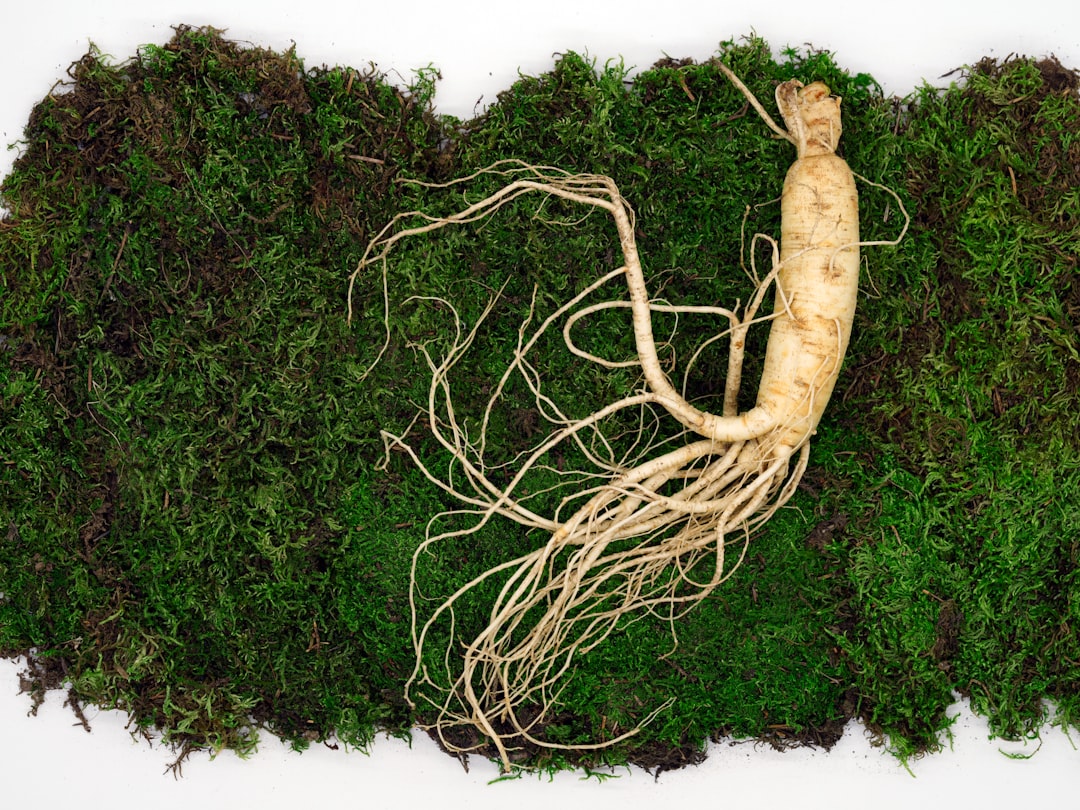
Korean Red Ginseng (Ren Shen) — one of nine herbs in Wan Dai Tang.
Wan Dai Tang for vaginal discharge ranks among the most carefully built formulas in classical Chinese gynecology. Practitioners use it to clear damp leucorrhea by lifting Spleen qi and softening a tense Liver. Qing dynasty physician Fu Qing-zhu created the formula, and clinicians have kept it in continuous use for over three centuries because it treats the cause rather than masks the symptom.
What “Wan Dai Tang” Means
The name translates as “End Discharge Decoction” — wan (end), dai (belt or discharge), tang (decoction). The “belt” reference points to the dai mai, the belt vessel that wraps the waist in classical Chinese channel theory. When the Spleen weakens and dampness builds up, fluid sinks to the lower belt region. As a result, women may notice white, cottage-cheese-like vaginal discharge with no strong odour, often paired with fatigue, loose stools, and a heavy feeling in the legs.
Fu Qing-zhu first published this formula in his gynecology text Fu Qing-zhu Nu Ke around 1827. He saw leucorrhea not as a local problem but as a systemic Spleen-Liver disharmony: dampness from a tired Spleen, blocked by a constrained Liver. Furthermore, his blend of nine herbs is unusual because most of the weight goes to two Spleen tonics, with smaller amounts of moving and draining herbs to keep the formula light.
The Pattern Wan Dai Tang Fits
Here’s why that matters: most damp-clearing formulas simply drain. In contrast, Wan Dai Tang for vaginal discharge tonifies first, then drains gently. As a result, it is one of the rare TCM formulas that fits a chronic, depleted pattern without further weakening the patient. For this reason, it suits women whose discharge has gone on for months or years and who feel run-down rather than acutely inflamed.
Typical signs that match the pattern include white or pale yellow discharge, watery to thick texture, no strong smell or burning, a swollen pale tongue with white coating, and a soft slow pulse. Additionally, women often report fatigue that worsens after eating, mild bloating, cold hands and feet, and heavier discharge in damp weather or just before menstruation.
However, the formula does have limits. It does not fit damp-heat patterns where discharge is yellow, foul-smelling, or paired with itching and burning. Likewise, it does not address infectious causes — bacterial, fungal, or sexually transmitted. Therefore, women with sudden onset, painful, or odorous discharge should see a clinician for assessment before reaching for any herbal formula.
How Wan Dai Tang for Vaginal Discharge Treats Spleen-Damp Patterns
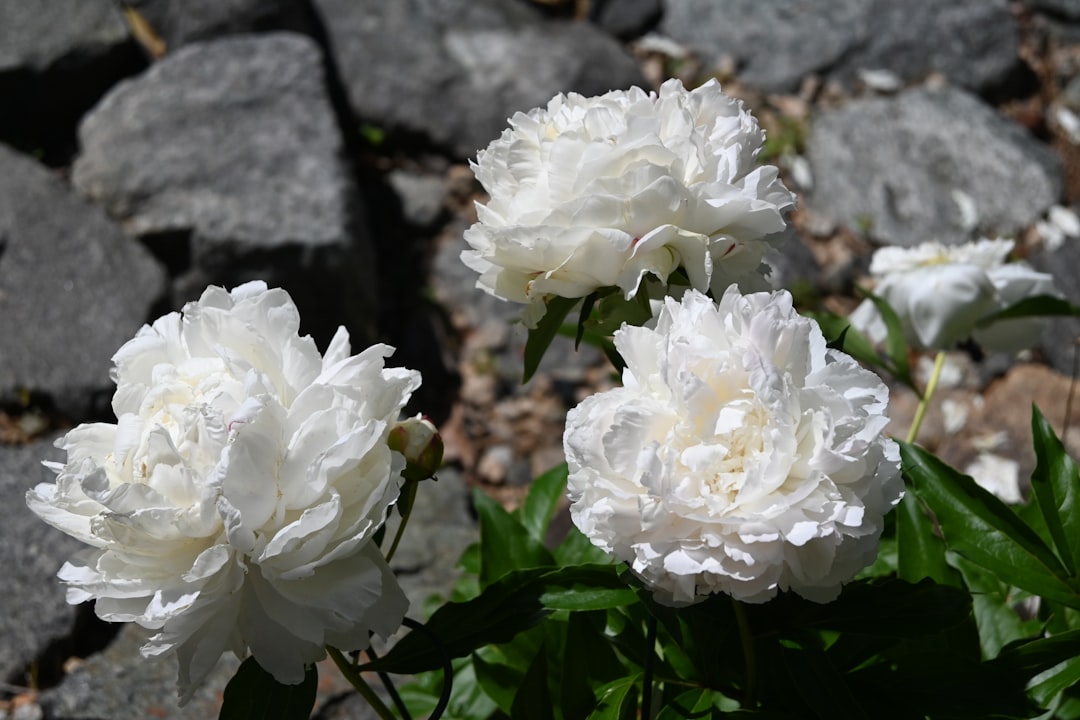
White Peony (Bai Shao) — softens Liver constraint in the formula.
How Wan Dai Tang Works on Spleen and Liver
Wan Dai Tang for vaginal discharge works by addressing two patterns at once: a weak Spleen that cannot move fluids upward, and a constrained Liver that traps damp in the lower body. Therefore, the herbs split roughly into three groups — Spleen tonics, damp-movers, and Liver-softeners — and the dose proportions tell you what the formula is doing.
White Atractylodes (Bai Zhu) and Chinese Yam (Shan Yao) make up most of the formula. Both act as gentle Spleen and qi tonics. Atractylodes dries damp from inside the digestive tract, while Yam holds fluids and feeds Lung, Spleen, and Kidney at once. Together, they rebuild the system that produces the dampness rather than just draining what is already there.
Korean Red Ginseng (Ren Shen) adds qi-tonifying weight in a small dose. It supports the Spleen’s ability to lift fluids and hold muscle tone — important because the dai mai loses its grip when qi falls. In addition, Plantain Seed (Che Qian Zi) is the only true damp-draining herb in the formula. It moves fluids out through the urinary route, which keeps the discharge from building up without dragging the rest of the body down.
Why Wan Dai Tang for Vaginal Discharge Is Different from Other Damp Formulas
Here’s how the Liver layer works: White Peony (Bai Shao) and Bupleurum (Chai Hu) form a small Liver-softening pair lifted directly from Xiao Yao San. White Peony feeds Liver blood and relaxes constraint; Bupleurum lifts and moves Liver qi gently. Furthermore, Chen Pi adds aromatic dryness to the digestive layer, and Japanese Catnip (Jing Jie) — used here in a tiny dose, often charred — moves blood lightly and lifts yang upward to draw discharge out of the lower jiao.
Honey-fried Licorice (Zhi Gan Cao) ties everything together. It harmonizes the formula and adds a small Spleen tonic effect. Specifically, the honey-frying method makes it warmer and sweeter than raw licorice, which suits the deficient pattern.
The overall logic is mechanism-driven, not symptom-driven. Spleen weak → dampness rises → Liver constraint blocks circulation → damp falls into the dai mai → discharge appears. Wan Dai Tang for vaginal discharge addresses every step of that chain rather than only the last one.
For comparison, women whose discharge stems from Liver qi stagnation with secondary damp may benefit from related formulas. In particular, practitioners often pair this formula with Jia Wei Xiao Yao San when emotional stress is a clear trigger. For those with strong digestive damp signs — bloating, heavy feeling, thick white tongue coating — Ping Wei San for bloating and dampness may suit the pattern better.
How to Use Wan Dai Tang for Vaginal Discharge
Wan Dai Tang is offered as a 1:5 tincture in 100mL, 250mL, 500mL, and 1000mL sizes.
How to Take Wan Dai Tang for Vaginal Discharge
Wan Dai Tang for vaginal discharge is most often prepared as a tincture or a decoction. Both work — the choice depends on what fits a patient’s routine. In particular, decoctions provide fuller traditional extraction; tinctures provide convenient dosing and a long shelf life.
Traditionally, Fu Qing-zhu prescribed the formula as a hot water decoction taken twice daily. However, modern practitioners often pick a tincture for ease of compliance, especially when the formula sits inside a longer treatment plan that runs three to six weeks. Tinctures use a 1:5 ratio with a controlled alcohol percentage, which keeps the alkaloids and saponins from the Ginseng and Bupleurum stable over time.
In addition, tea preparation works if a patient prefers it. The herbs simmer in water for thirty to forty minutes, and the liquid is taken warm. This method sits closest to the original protocol, though it asks for more daily prep work.
What to Expect Over Time
Here’s a key practical point: Wan Dai Tang is not a one-dose herb. It works gradually. As a result, most practitioners report changes in discharge volume and consistency within ten to fourteen days, with full resolution often taking four to eight weeks. Furthermore, women using the formula often notice related shifts — better stool quality, more energy, less bloating — because the formula treats the whole Spleen-Liver pattern, not just the local symptom.
For the formula to work well, supportive lifestyle steps help. Specifically, reducing cold and raw foods supports Spleen warmth. Cutting dairy and sugar lowers the dampness load. In addition, light daily movement — walking, gentle yoga, qi gong — helps the Liver move qi smoothly. These steps are not mandatory, but Spleen-Liver patterns rarely resolve when daily habits work against the formula.
How Herbal Clinic Prepares the Formula
Herbal Clinic prepares Wan Dai Tang for vaginal discharge as a 1:5 tincture using all nine herbs in their classical proportions. We source White Atractylodes, Chinese Yam, Korean Red Ginseng, and the rest of the herbs from suppliers who meet strict quality standards. Furthermore, every batch passes both lab testing and an organoleptic review by our herbalist team before bottling. The tincture comes in 100mL, 250mL, 500mL, and 1000mL sizes.
For practitioners and clinicians outside our network, technical writing on Spleen-damp gynecology is available through the Institute for Traditional Medicine.
These statements have not been evaluated by Health Canada. This product is not intended to diagnose, treat, cure, or prevent any disease.
FAQ
- Superior Sourcing: Our herbs are sourced from all over the world to avoid seasonal fluctuations in availability, keeping herbs accessible. Our suppliers meet strict standards that ensure top quality herbs, most of which are organic, wildcrafted, sustainably grown, or grown using permaculture. We support local farmers and grow many of our own herbs.
- Superior Processing: Our tinctures are made using the classic tincturing method. The tinctures are made in a 1:5 ratio which allows for the optimal extraction of the herb. The alcohol percentage is strictly controlled depending on the herb and part of the plant that is used.
- Superior Selection: We take pride in our growing selection of over 300 individual herbs. If we don’t carry the herb you’re seeking, we can likely track it down for you.
- Superior Quality Control: Our tinctures are thoroughly tested by a third-party lab and with an organoleptic evaluation by our team of herbalists prior to final bottling.
- Superior Price: Our tinctures are more cost-effective than other tinctures on the market. With an eye towards efficiency, we keep our costs low by maintaining good relationships with our wide network of suppliers and ordering herbs in bulk quantities.
- We Care About the Environment: We repackage materials that are shipped to us (so don’t be surprised if our packages look different from time to time!). We recycle or reuse materials whenever possible. We turn the cardboard we receive from other suppliers into packing material. We donate to avoid waste to groups like Naturopaths Without Borders. Our workforce almost completely uses public transportation or bikes. We are powered using 100% renewable energy through Bullfrog Power.
- We Donate To Charity: We support many causes that make the world better. We donate a portion of our profits or products. These include charities that support environmental and natural sustainability.
Set up an online account and order through the website. If you don’t have an account and place an order, one will be created for you.
Click here to subscribe to our mailing list.
Our products are made in Toronto, Ontario, Canada by a team of Herbalists and Naturopathic Doctors. The herbs and ingredients we use to make our products are sourced both locally and globally to keep herbs accessible and sustainable.
The majority of our herbs are certified organic, sustainably wildcrafted, or come from small-scale local organic farms that do not yet have organic certification. We always do our best to provide organic herbs in your formulas. We work with a variety of suppliers to keep costs low.
Although most of our products do not contain gluten, we do not have gluten-free certification for our production facility. Feel free to ask about any specific products and we’ll share whatever information we have available.
For liability and regulatory reasons, we don’t make any claims as to how our herbs should be used, including dosing recommendations. Please review our disclaimer, as well as our terms and policies.