Part of our complete guide to classical Chinese digestive formulas.
Ping Wei San for Bloating and Dampness: Origins and Tradition
Magnolia officinalis — the bark of this tree provides Hou Po, one of the six herbs in Ping Wei San.
Ping Wei San for bloating and dampness is one of the oldest and most reliably used formulas in classical Chinese medicine, with roots stretching back nearly a thousand years. The formula first appeared in the Hejiju Fang, a Song Dynasty medical text compiled in 1078 CE. In fact, practitioners across East Asia have continued to use it ever since, making it one of the most enduring formulas in the TCM digestive canon.
The name is a direct description of its purpose. Ping means to calm or pacify. Wei refers to the Stomach. San means powder. Together, the name points to its central action: settling the Stomach and clearing what disrupts it. Historically, herbalists ground the herbs into a coarse powder and simmered them with fresh ginger and jujube dates. Today, Herbal Clinic prepares Ping Wei San as a liquid tincture for easier daily use.
The formula addresses a specific TCM pattern: dampness accumulating in the Middle Jiao. In TCM, the Middle Jiao is the digestive centre. The Spleen and Stomach work together there to transform food into usable energy and distribute it through the body. When dampness builds up in this region, it blocks the Spleen’s natural transforming action. As a result, food and fluid accumulate instead of moving freely, and the Stomach fills with a heavy, stagnant feeling.
Dampness in TCM is not a vague metaphor. It refers to a specific set of conditions. These develop from poor diet, damp environments, or a constitutionally weak digestive system. The Spleen is particularly vulnerable to dampness. Consequently, when it becomes overburdened, it loses its ability to move things along.
The Six Herbs in the Herbal Clinic Formula
The six herbs in the Herbal Clinic formula each play a distinct role. White Atractylodes (Atractylodes macrocephala, Bai Zhu) serves as the primary herb — it dries dampness and strengthens Spleen function. Magnolia bark (Magnolia officinalis, Hou Po), in addition, moves Qi downward and relieves the sensation of fullness and distension. Aged tangerine peel (Citrus reticulata, Chen Pi) also regulates Qi flow and further dries dampness. Honey-fried licorice (Glycyrrhiza uralensis, Zhi Gan Cao) tonifies Spleen Qi and harmonizes the other herbs. Fresh ginger (Zingiber officinale, Sheng Jiang), moreover, warms the Stomach and dispels cold. Finally, smoked jujube (Ziziphus jujuba, Da Zao) supports Spleen Qi and nourishes the blood.
Furthermore, Ping Wei San has served as a base formula for many other classical digestive formulas. Xiang Sha Liu Jun Zi Tang, for instance, builds on this foundation by adding warming and Qi-moving herbs for more complex patterns. Understanding this formula, therefore, gives insight into a broader family of formulas used across TCM digestive medicine.
How Ping Wei San Addresses Bloating and Dampness in the Body
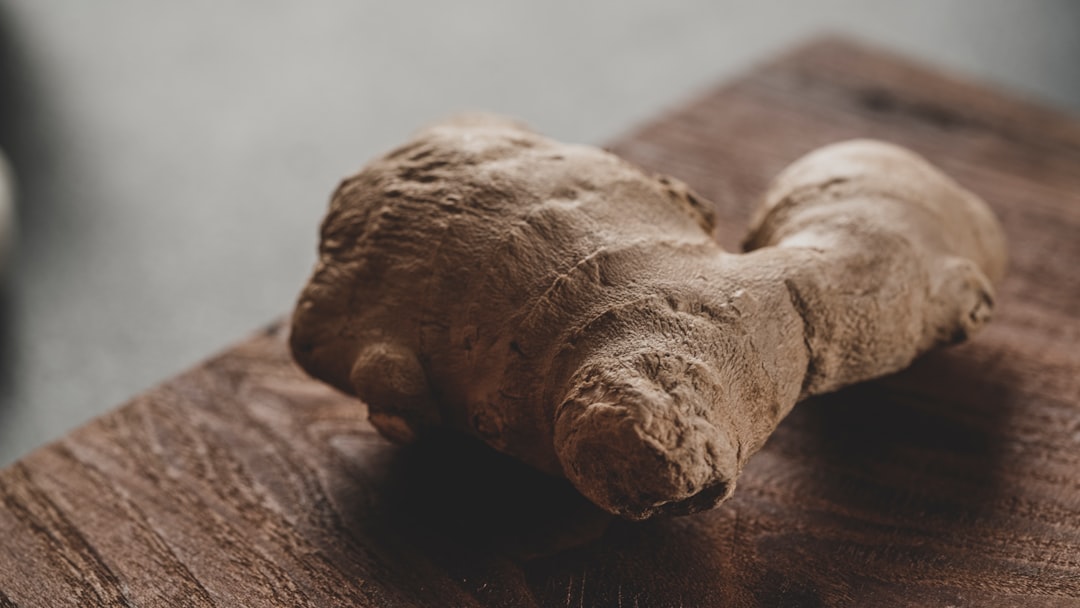
Fresh ginger (Sheng Jiang) is one of the six herbs in Ping Wei San, where it warms the Stomach and dispels cold.
Ping Wei San for bloating and dampness targets what TCM practitioners call Damp Obstruction of the Spleen. This pattern has a recognizable set of signs. The main complaint is usually a sensation of distension or fullness in the upper abdomen, particularly after meals. Appetite drops. The body feels heavy. Bowel movements may be loose or irregular. Moreover, a thick, greasy white coating on the tongue provides a reliable clinical sign for practitioners evaluating this pattern.
But there is more to it than that. The dampness creates a kind of internal stagnation. Qi — the functional energy that drives digestion — cannot move normally when dampness clogs the middle. Consequently, this produces not just physical discomfort but also mental sluggishness and fatigue. Many patients describe it as feeling weighed down, both physically and mentally, after eating.
Who Is Most Likely to Develop This Pattern?
The pattern that Ping Wei San targets tends to develop gradually. Specifically, common contributing factors include:
- A diet high in cold, raw, or dairy-rich foods
- Irregular meal timing or eating under stress
- Living or working in damp, humid conditions
- A constitution that tends toward digestive weakness
Additionally, TCM practitioners often see this pattern after illness, holiday excess, or long periods of poor eating. These experiences weaken the Spleen’s transforming function. Dampness then moves in to fill the gap.
Here is why Ping Wei San works so well for this presentation: the formula pairs herbs that dry dampness — Bai Zhu, Hou Po, and Chen Pi — with herbs that move Qi to break up the stagnation. It does not simply suppress symptoms. In fact, it restores the Spleen’s ability to move and transform by clearing what blocks it.
How Ping Wei San Clears Dampness
Furthermore, each herb contributes in a specific way. Researchers have studied White Atractylodes (Bai Zhu) for its effects on gastric motility and gut flora. Findings suggest it promotes intestinal movement and reduces bacterial overgrowth. Additionally, Magnolia bark (Hou Po) contains plant compounds honokiol and magnolol. Studies have linked these compounds to smooth muscle relaxation and improved gastric emptying. Aged tangerine peel also provides volatile oils that stimulate digestive secretions and reduce gas. Meanwhile, ginger (Sheng Jiang) supports gastric motility and exerts a warming action on the stomach lining. For a summary of relevant research, see the listings on PubMed.
In contrast to tonifying formulas like Si Jun Zi Tang, Ping Wei San focuses on clearing and moving. For this reason, TCM practitioners typically reserve it for patterns where dampness is clearly the dominant concern. When bloating and dampness are the central issue, Ping Wei San is the classic first choice. A thick greasy tongue coating confirms the pattern.
Herbal Clinic’s version uses White Atractylodes rather than Cang Zhu (grey Atractylodes). This choice produces a formula with slightly more Spleen-tonifying action alongside the dampness-clearing work. As a result, it suits patients who present with a mix of dampness obstruction and mild underlying Spleen deficiency — a combination that is common in modern clinical practice.
How to Use Ping Wei San for Bloating and Digestive Dampness
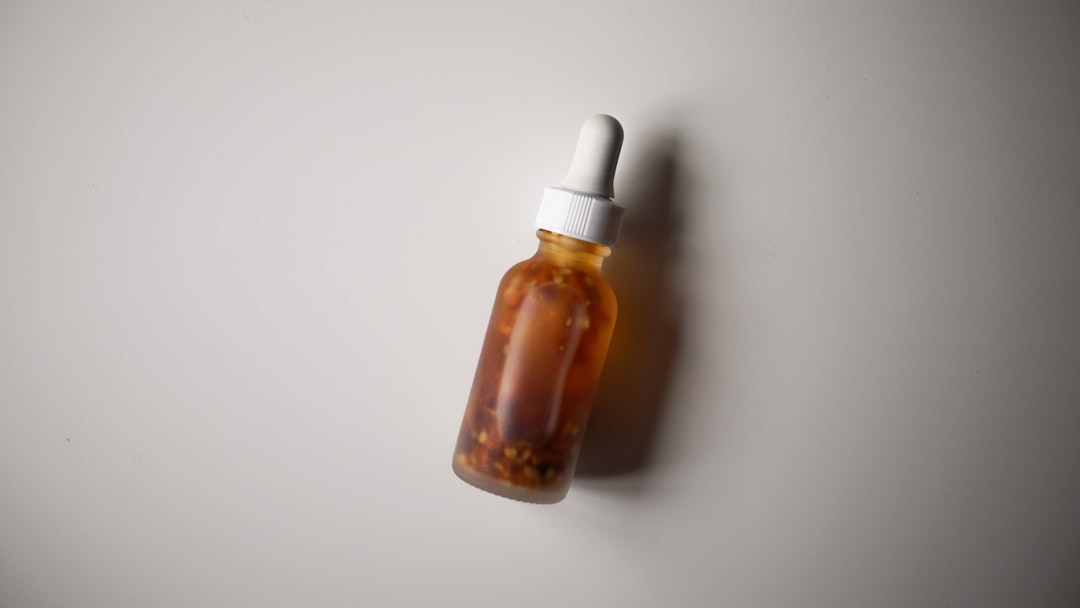
Herbal Clinic prepares Ping Wei San as a liquid tincture using a 1:5 extraction ratio.
Ping Wei San for bloating and dampness is available from Herbal Clinic as a liquid tincture. Herbal Clinic prepares it with a 1:5 extraction ratio using pharmaceutical-grade alcohol. Moreover, this extraction draws out the volatile oils from Chen Pi and bitter compounds from Hou Po. It also extracts Bai Zhu’s active parts more efficiently than powders or capsules allow.
In fact, tinctures offer a practical advantage over traditional decoctions — no preparation time, consistent dosing, and easy daily use. Most people find it convenient to take before or after meals, particularly at dinner. The tincture format also makes it easier to combine with other formulas when a practitioner recommends a broader protocol.
Additionally, TCM practice traditionally combines Ping Wei San with dietary adjustments that support the Spleen. Practitioners recommend warm, cooked foods over cold or raw meals when this pattern is active. Furthermore, reducing dairy, sugar, and alcohol — all of which contribute to internal dampness in TCM terms — supports the formula’s clearing action. Overall, these are not strict rules, but adjustments that many people find genuinely helpful alongside herbal support.
How It Fits With Other Digestive Formulas
For those familiar with other formulas in the Herbal Clinic TCM range, Ping Wei San works well alongside Si Jun Zi Tang (Four Gentlemen), which focuses on tonifying Spleen Qi rather than clearing dampness. When both patterns are present — deficiency and dampness — the two formulas complement each other well. Similarly, if bloating and dampness occur alongside acid reflux or burning, practitioners often consider Ban Xia Xie Xin Tang, which addresses both Stomach rebellious Qi and heat signs.
Most importantly, Ping Wei San is a targeted formula. It suits situations where dampness is clearly the central issue. In short, when the tongue coating confirms the pattern, it is one of the most direct formulas in the classical digestive canon.
What to Expect When Using Ping Wei San
In clinical practice, people taking Ping Wei San for bloating and dampness typically notice improvement in abdominal fullness within the first few weeks. The heavy, sluggish feeling after meals tends to ease. Appetite improves. Bowel movements often become more regular. Additionally, many people report that the mental heaviness associated with this pattern begins to lift as well.
However, herbal support works best alongside lifestyle changes. Consistent meal times, warm cooked foods, and moderate physical activity all support the Spleen’s function. Each of these adjustments complements the formula’s action. As a result, combining Ping Wei San with these changes tends to produce more lasting improvements than relying on the formula alone.
Herbal Clinic makes Ping Wei San in Toronto, Ontario, using organically sourced herbs wherever available. Each batch goes through third-party testing and an in-house sensory review before final bottling. These standards ensure that what you receive has the potency and character the formula requires. Notably, the formula comes in four sizes — 100mL, 250mL, 500mL, and 1000mL. This range makes it suitable for short-term use and longer clinical protocols.
For anyone working with a registered TCM practitioner or naturopathic doctor, Ping Wei San for bloating and dampness is worth discussing as part of a broader digestive support protocol. It is particularly relevant in spring — a season when damp-type digestive complaints tend to be most common.
These statements have not been evaluated by Health Canada. This product is not intended to diagnose, treat, cure, or prevent any disease.
FAQ
- Superior Sourcing: Our herbs are sourced from all over the world to avoid seasonal fluctuations in availability, keeping herbs accessible. Our suppliers meet strict standards that ensure top quality herbs, most of which are organic, wildcrafted, sustainably grown, or grown using permaculture. We support local farmers and grow many of our own herbs.
- Superior Processing: Our tinctures are made using the classic tincturing method. The tinctures are made in a 1:5 ratio which allows for the optimal extraction of the herb. The alcohol percentage is strictly controlled depending on the herb and part of the plant that is used.
- Superior Selection: We take pride in our growing selection of over 300 individual herbs. If we don’t carry the herb you’re seeking, we can likely track it down for you.
- Superior Quality Control: Our tinctures are thoroughly tested by a third-party lab and with an organoleptic evaluation by our team of herbalists prior to final bottling.
- Superior Price: Our tinctures are more cost-effective than other tinctures on the market. With an eye towards efficiency, we keep our costs low by maintaining good relationships with our wide network of suppliers and ordering herbs in bulk quantities.
- We Care About the Environment: We repackage materials that are shipped to us (so don’t be surprised if our packages look different from time to time!). We recycle or reuse materials whenever possible. We turn the cardboard we receive from other suppliers into packing material. We donate to avoid waste to groups like Naturopaths Without Borders. Our workforce almost completely uses public transportation or bikes. We are powered using 100% renewable energy through Bullfrog Power.
- We Donate To Charity: We support many causes that make the world better. We donate a portion of our profits or products. These include charities that support environmental and natural sustainability.
Set up an online account and order through the website. If you don’t have an account and place an order, one will be created for you.
Click here to subscribe to our mailing list.
Our products are made in Toronto, Ontario, Canada by a team of Herbalists and Naturopathic Doctors. The herbs and ingredients we use to make our products are sourced both locally and globally to keep herbs accessible and sustainable.
The majority of our herbs are certified organic, sustainably wildcrafted, or come from small-scale local organic farms that do not yet have organic certification. We always do our best to provide organic herbs in your formulas. We work with a variety of suppliers to keep costs low.
Although most of our products do not contain gluten, we do not have gluten-free certification for our production facility. Feel free to ask about any specific products and we’ll share whatever information we have available.
For liability and regulatory reasons, we don’t make any claims as to how our herbs should be used, including dosing recommendations. Please review our disclaimer, as well as our terms and policies.