What Is Chaga? The Story Behind Chaga Mushroom Benefits
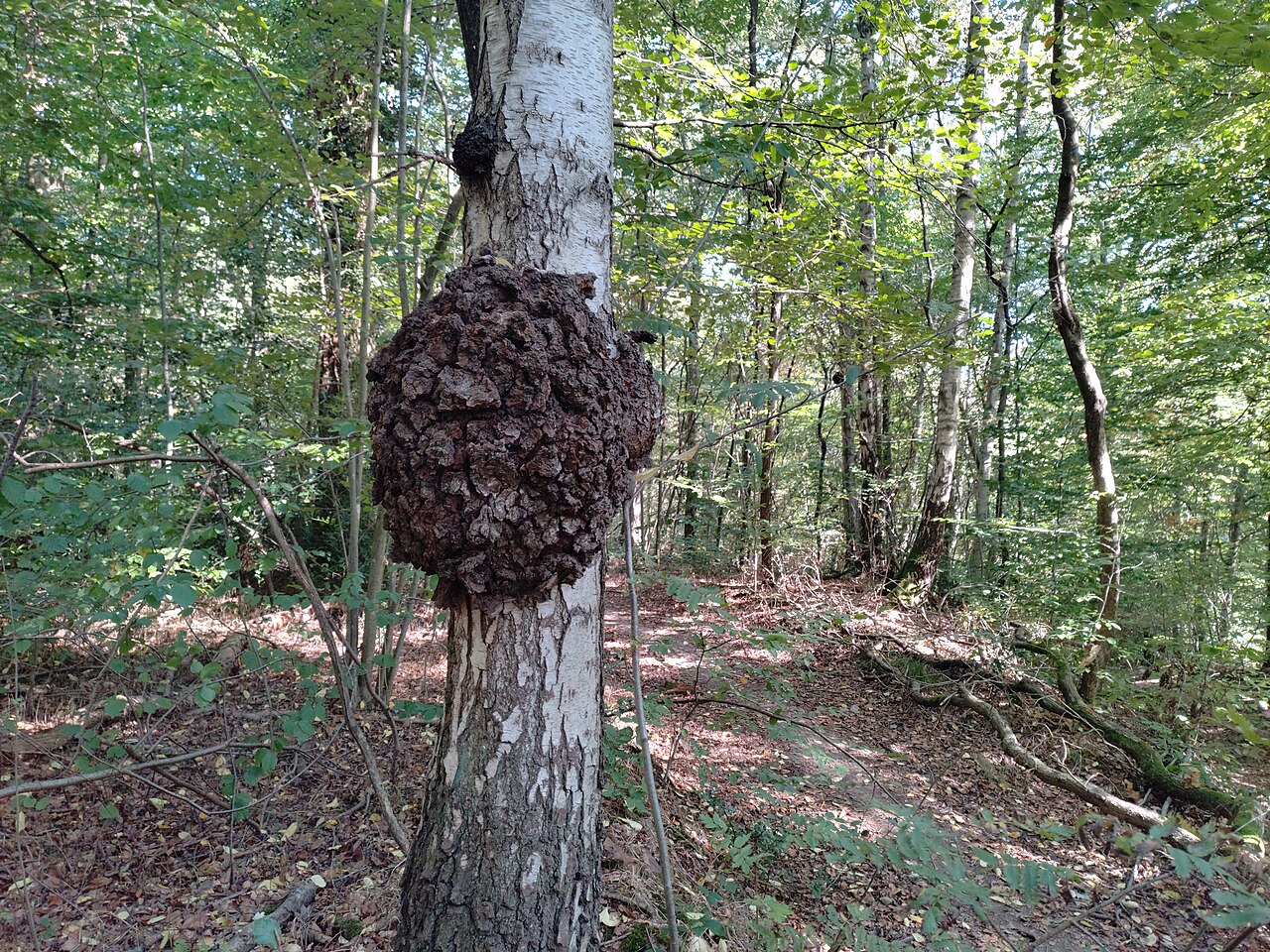
Wild chaga on birch, the source of traditional chaga mushroom benefits in northern forests.
Chaga mushroom benefits have interested herbalists for centuries, yet the fungus looks nothing like a typical mushroom. Instead of a cap and stem, chaga forms a black, cracked lump on the side of a birch tree. In fact, many people walk right past it and mistake it for burnt wood. So what is this odd growth, and why do people brew tea from it?
Chaga (Inonotus obliquus) is a fungus in the Hymenochaetaceae family. It grows mostly on birch trees in cold northern forests across Canada, Russia, Scandinavia and the northern United States. Its other common names include birch conk, clinker polypore and cinder conk. Those last two names fit well, because the outer crust really does look like charcoal.
What Chaga Looks Like
The part people harvest is not a true fruiting body. Rather, it is a sterile conk, called a sclerotium, that blends fungal tissue with birch wood. On the outside, it is black, hard and deeply cracked. Break it open, however, and the inside shows a rusty orange-brown colour with a cork-like texture.
Chaga grows slowly. A conk large enough to harvest can take several years to form, and over time it weakens its host tree. For that reason, careful harvesters take only part of the growth and leave the rest to regrow.
A Long History in the North
People in Siberia and northern Russia have used chaga for a very long time. For example, Khanty communities in western Siberia traditionally brewed it as a daily tea. Russian folk medicine also adopted it, especially in rural villages far from doctors.
Chaga later travelled west. During the Second World War, people in Finland brewed it as a coffee substitute when real coffee ran short. Today, it remains a common forest tea in Scandinavia and the Baltic region. Here in Canada, foragers also find it on birch across Ontario, Quebec and the boreal north.
Here’s why that matters: chaga is not a trendy new product. Instead, it is a traditional northern remedy with deep roots, and modern research is only now catching up. If you already enjoy medicinal mushrooms like reishi or turkey tail, chaga is a natural next one to explore.
Chaga Mushroom Benefits and Key Properties
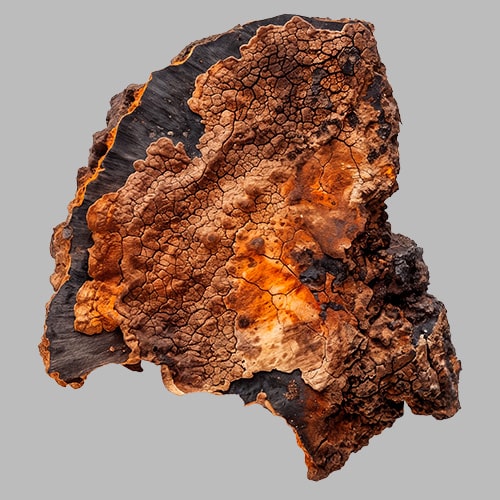
Dried chaga, with its dark crust and orange core
Most traditional chaga mushroom benefits centre on general resilience, especially through long northern winters. Herbalists have traditionally used chaga to support the immune system, digestion and overall vitality. So what gives this fungus its reputation? The answer lies in its chemistry.
What’s Inside Chaga
Chaga contains several groups of active compounds. First, it holds beta-glucans, which are complex sugars that many medicinal mushrooms share. Researchers associate beta-glucans with immune support, because they appear to interact with immune cells in the gut. Second, chaga contains triterpenes such as inotodiol and lanosterol.
Third, chaga draws compounds from its host tree. Birch bark is rich in betulin, and chaga contains both betulin and betulinic acid. This is where it gets interesting: few other medicinal mushrooms offer this birch-linked chemistry. Finally, the dark outer crust holds melanin and polyphenols, which give chaga its strong antioxidant profile.
Chaga Mushroom Benefits for Everyday Wellness
Traditionally, people have turned to chaga for a few main reasons:
- Immune support, especially during cold and flu season
- Antioxidant support, thanks to its high polyphenol content
- Digestive comfort, which reflects its long use as a stomach tonic in Russian folk practice
- General vitality, as a warming daily tea through the winter
Most research on chaga so far comes from lab and animal studies. Early findings suggest its extracts may help the body manage oxidative stress and inflammation. However, large human trials are still limited. As a result, it makes sense to think of chaga as a traditional wellness herb rather than a proven treatment. Memorial Sloan Kettering offers a balanced summary of chaga research if you want to read further.
So what does this mean for you? Chaga fits well into a seasonal routine. Many people also pair it with other mushrooms, such as lion’s mane, for a broader blend.
How to Use Chaga Mushroom at Home
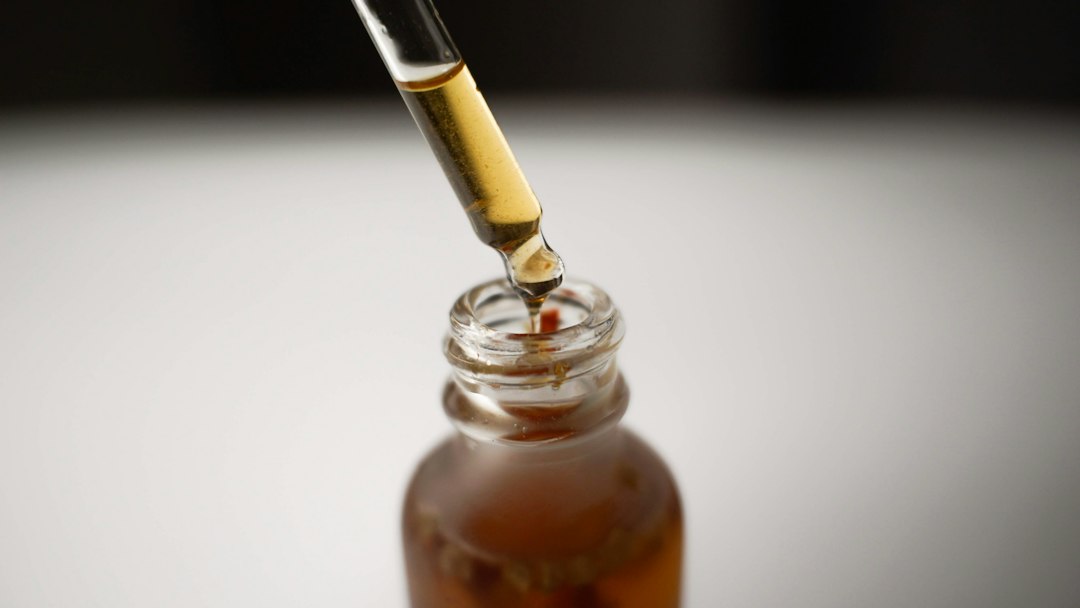
Chaga tincture is an easy way to add chaga to your day
The simplest way to enjoy chaga mushroom benefits is a slow-simmered tea. Because chaga is so dense, it needs more time than a typical herbal tea. A quick steep simply won’t draw out much flavour.
Making Chaga Tea
Here’s how it works. First, place a few small chunks or a spoonful of ground chaga in a pot of water. Then, bring it to a gentle simmer and let it cook for at least an hour. The water turns dark, almost like coffee. Many people reuse the same chunks two or three times before they lose their colour.
The taste is mild, earthy and slightly vanilla-like. As a result, it works well with a splash of milk, a little honey or a cinnamon stick. Some people also blend it into their morning coffee to soften the flavour.
Chaga Tincture
A chaga tincture is another option, and it suits busy days well. Alcohol pulls out compounds like triterpenes and betulinic acid, while water draws out the beta-glucans. For this reason, many herbalists prefer an alcohol-and-water extract for mushrooms. Adding a few drops to water or tea makes an easy daily habit.
Safety Notes
Chaga is generally well tolerated, but it is not for everyone. For example, it contains a high level of oxalates, so people with a history of kidney stones should be cautious. It may also affect blood sugar and blood clotting. Therefore, speak with a healthcare practitioner first if you take medication for diabetes or a blood thinner, or if you are pregnant or breastfeeding.
How Herbal Clinic Prepares Chaga
At Herbal Clinic, we offer chaga as both a tincture and a dried herb. Our team of herbalists makes every tincture in Toronto using the classic 1:5 tincturing method. We also choose suppliers who harvest with care, because a slow-growing fungus deserves respect. Whether you prefer a warm pot of tea or a quick tincture, chaga is an easy herb to bring into your winter routine.
FAQ
- Superior Sourcing: Our herbs are sourced from all over the world to avoid seasonal fluctuations in availability, keeping herbs accessible. Our suppliers meet strict standards that ensure top quality herbs, most of which are organic, wildcrafted, sustainably grown, or grown using permaculture. We support local farmers and grow many of our own herbs.
- Superior Processing: Our tinctures are made using the classic tincturing method. The tinctures are made in a 1:5 ratio which allows for the optimal extraction of the herb. The alcohol percentage is strictly controlled depending on the herb and part of the plant that is used.
- Superior Selection: We take pride in our growing selection of over 300 individual herbs. If we don’t carry the herb you’re seeking, we can likely track it down for you.
- Superior Quality Control: Our tinctures are thoroughly tested by a third-party lab and with an organoleptic evaluation by our team of herbalists prior to final bottling.
- Superior Price: Our tinctures are more cost-effective than other tinctures on the market. With an eye towards efficiency, we keep our costs low by maintaining good relationships with our wide network of suppliers and ordering herbs in bulk quantities.
- We Care About the Environment: We repackage materials that are shipped to us (so don’t be surprised if our packages look different from time to time!). We recycle or reuse materials whenever possible. We turn the cardboard we receive from other suppliers into packing material. We donate to avoid waste to groups like Naturopaths Without Borders. Our workforce almost completely uses public transportation or bikes. We are powered using 100% renewable energy through Bullfrog Power.
- We Donate To Charity: We support many causes that make the world better. We donate a portion of our profits or products. These include charities that support environmental and natural sustainability.
Set up an online account and order through the website. If you don’t have an account and place an order, one will be created for you.
Click here to subscribe to our mailing list.
Our products are made in Toronto, Ontario, Canada by a team of Herbalists and Naturopathic Doctors. The herbs and ingredients we use to make our products are sourced both locally and globally to keep herbs accessible and sustainable.
The majority of our herbs are certified organic, sustainably wildcrafted, or come from small-scale local organic farms that do not yet have organic certification. We always do our best to provide organic herbs in your formulas. We work with a variety of suppliers to keep costs low.
Although most of our products do not contain gluten, we do not have gluten-free certification for our production facility. Feel free to ask about any specific products and we’ll share whatever information we have available.
For liability and regulatory reasons, we don’t make any claims as to how our herbs should be used, including dosing recommendations. Please review our disclaimer, as well as our terms and policies.