What Is Bladderwrack? A Coastal Herb for Thyroid Health
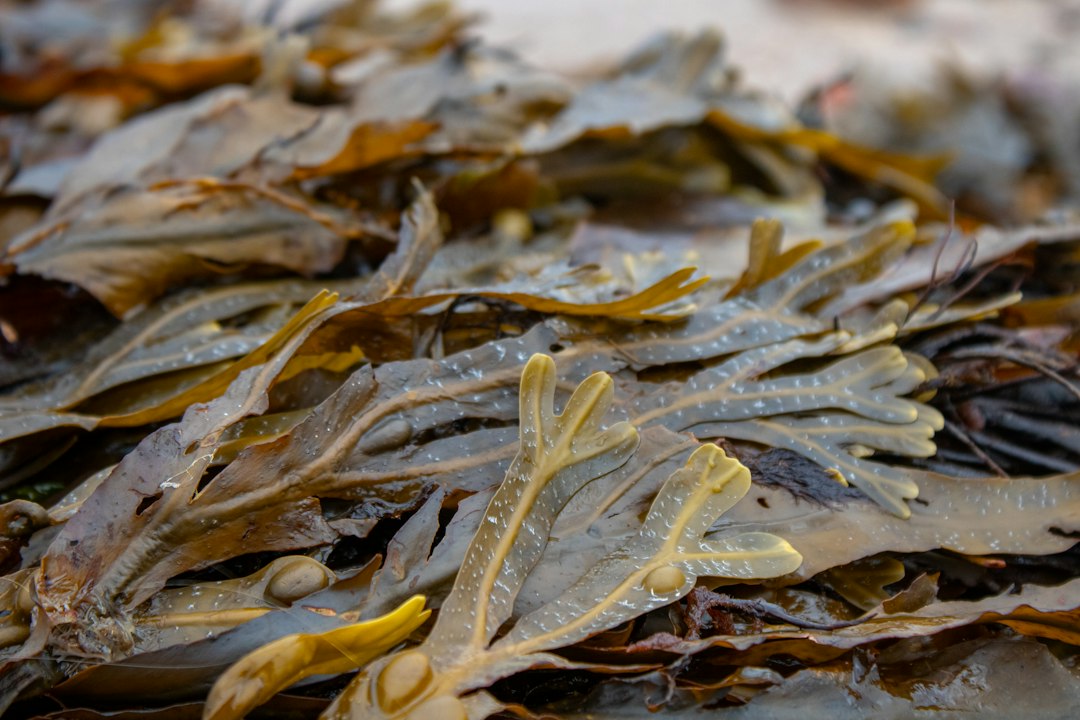
Bladderwrack for thyroid health starts here: fresh fronds with paired air bladders.
Bladderwrack for thyroid health is one of the oldest seaweed traditions in Western herbalism. In fact, the story starts with a chemistry accident. In 1811, the French chemist Bernard Courtois was working with seaweed ash when a violet vapour rose from his vat. That vapour turned out to be iodine, the mineral your thyroid needs to make its hormones.
So what exactly is this seaweed? Here’s the short version.
Bladderwrack is a brown seaweed with the Latin name Fucus vesiculosus. It belongs to the Fucaceae family, a group of tough, leathery algae that cling to rocks between the tides. People also call it black tang, rockweed, sea oak and bladder fucus. You will find it along the cold shores of the North Atlantic, from Atlantic Canada to Norway and the Baltic Sea.
The plant is easy to spot. Its olive-brown fronds fork again and again, and a firm midrib runs down the centre of each one. Along the fronds sit small, round air pockets, usually in pairs. These bladders give the seaweed its name. They also keep it floating upright when the tide comes in, so it can reach the light.
A Long History on the Shore
Coastal communities have used bladderwrack for centuries. For example, farmers spread it on fields as fertiliser, and families fed it to livestock in lean winters. Later, nineteenth-century herbalists began to recommend it for goitre, a swelling of the thyroid gland. Because goitre was common in inland regions with iodine-poor soil, a herb from the sea made practical sense.
The key takeaway: bladderwrack earned its place in herbal practice long before anyone could measure a thyroid hormone. That history is why bladderwrack for thyroid health still appears in herbal guides today. Herbalists still reach for it, but now they have a clearer sense of why it works and when to be careful.
How Bladderwrack Supports Thyroid Health
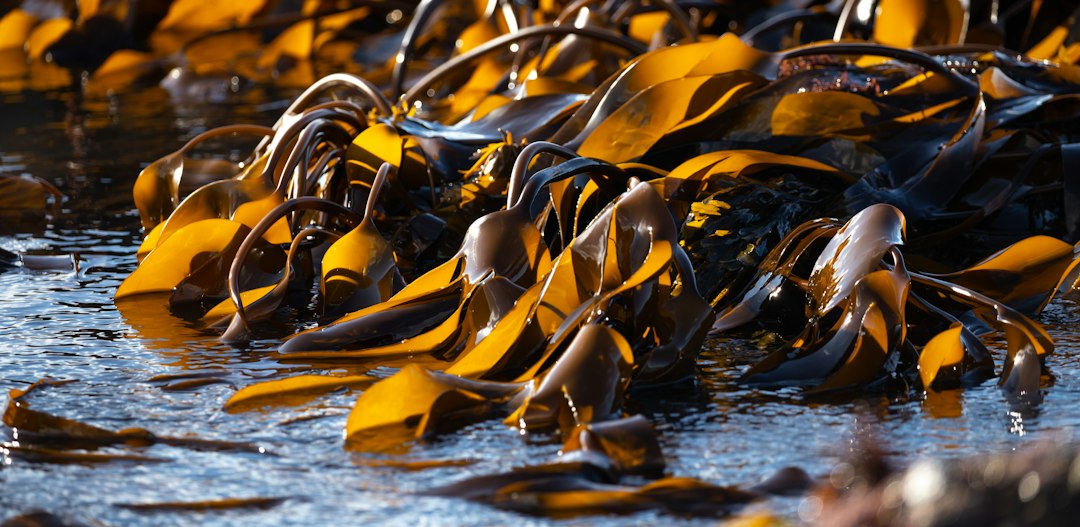
Brown seaweeds draw iodine and minerals straight from seawater.
To understand bladderwrack for thyroid health, it helps to start with the gland itself. Your thyroid sits at the base of your neck and sets the pace for your metabolism. It builds two main hormones, T4 and T3, and each one contains iodine atoms. Without enough iodine, the gland simply cannot keep up.
Here’s why that matters: bladderwrack is a natural source of iodine. Seaweeds pull the mineral from seawater and store it in their tissue. As a result, herbalists have traditionally used bladderwrack for thyroid health, especially to support a sluggish or underactive gland when diet alone falls short.
But there’s more to it than iodine. Bladderwrack also contains several other compounds of interest:
- Fucoidan, a sulphur-rich sugar that researchers are studying for its effects on inflammation and immunity
- Alginates, soluble fibres that turn slippery in water and give the herb its soothing, demulcent quality
- Phlorotannins, plant compounds with antioxidant activity
- Trace minerals such as potassium, magnesium and calcium
Beyond the thyroid, people also associate bladderwrack with healthy weight management and with easing stiff joints. However, most of the research so far comes from lab and animal studies. Human trials remain small, so the evidence is promising rather than proven.
Bladderwrack, Iodine and Thyroid Health: A Word of Caution
Iodine works on a curve. Too little slows the thyroid down, but too much can also throw it off balance. For that reason, bladderwrack is not a good fit for everyone. Avoid it if you have an overactive thyroid or autoimmune thyroid disease such as Hashimoto’s. Likewise, check with your practitioner first if you take thyroid medication. You should also skip it during pregnancy and breastfeeding. The NIH Office of Dietary Supplements offers a clear overview of how much iodine adults need.
Herbalists rarely use bladderwrack on its own. Instead, they often pair it with blue flag root and with ashwagandha, an adaptogen with its own thyroid research. You can read more in our complete guide to ashwagandha.
How to Use Bladderwrack Tincture and Tea

Seaweed absorbs whatever is in its water, so sourcing matters.
Bladderwrack for thyroid health comes in a few simple forms. At Herbal Clinic, you can buy it as a tincture, as a glycerite, or as dried seaweed for tea. Each one suits a slightly different routine.
Tincture. A tincture is the most convenient option. You add a measured amount to a little water and drink it, so it travels well and fits into a busy morning. We make ours with the classic tincturing method at a 1:5 ratio, which you can learn about in our guide on how to make a tincture.
Glycerite. If you prefer to avoid alcohol, the glycerite option uses vegetable glycerin instead. It tastes sweeter, which also helps to balance the salty, sea-air flavour of the herb.
Tea. Dried bladderwrack makes a mild, savoury tea. Many people simmer it gently for 10 to 15 minutes rather than steeping it like a leaf tea, because the tough fronds need time to soften. The result tastes a little like a light broth.
Tips for Using Bladderwrack for Thyroid Health
So how do you make bladderwrack part of your day? First, talk with a health practitioner and consider a thyroid blood test before you start. That gives you a clear baseline. Next, look at your other iodine sources. Kelp tablets, multivitamins and iodized salt all add up, so try not to stack them. Finally, stay consistent. Herbalists see bladderwrack for thyroid health as a slow, steady ally rather than a quick fix.
How we source our bladderwrack
Seaweed absorbs whatever is in the water around it. That is why sourcing matters so much with this herb. We work with trusted suppliers, and a third-party lab tests our tinctures before final bottling. Then our team of herbalists checks each batch by taste, smell and appearance.
If you are building a fall wellness routine, bladderwrack pairs well with other supportive herbs. For example, our guide to astragalus root for immune support covers another herb that suits the colder months.
FAQ
- Superior Sourcing: Our herbs are sourced from all over the world to avoid seasonal fluctuations in availability, keeping herbs accessible. Our suppliers meet strict standards that ensure top quality herbs, most of which are organic, wildcrafted, sustainably grown, or grown using permaculture. We support local farmers and grow many of our own herbs.
- Superior Processing: Our tinctures are made using the classic tincturing method. The tinctures are made in a 1:5 ratio which allows for the optimal extraction of the herb. The alcohol percentage is strictly controlled depending on the herb and part of the plant that is used.
- Superior Selection: We take pride in our growing selection of over 300 individual herbs. If we don’t carry the herb you’re seeking, we can likely track it down for you.
- Superior Quality Control: Our tinctures are thoroughly tested by a third-party lab and with an organoleptic evaluation by our team of herbalists prior to final bottling.
- Superior Price: Our tinctures are more cost-effective than other tinctures on the market. With an eye towards efficiency, we keep our costs low by maintaining good relationships with our wide network of suppliers and ordering herbs in bulk quantities.
- We Care About the Environment: We repackage materials that are shipped to us (so don’t be surprised if our packages look different from time to time!). We recycle or reuse materials whenever possible. We turn the cardboard we receive from other suppliers into packing material. We donate to avoid waste to groups like Naturopaths Without Borders. Our workforce almost completely uses public transportation or bikes. We are powered using 100% renewable energy through Bullfrog Power.
- We Donate To Charity: We support many causes that make the world better. We donate a portion of our profits or products. These include charities that support environmental and natural sustainability.
Set up an online account and order through the website. If you don’t have an account and place an order, one will be created for you.
Click here to subscribe to our mailing list.
Our products are made in Toronto, Ontario, Canada by a team of Herbalists and Naturopathic Doctors. The herbs and ingredients we use to make our products are sourced both locally and globally to keep herbs accessible and sustainable.
The majority of our herbs are certified organic, sustainably wildcrafted, or come from small-scale local organic farms that do not yet have organic certification. We always do our best to provide organic herbs in your formulas. We work with a variety of suppliers to keep costs low.
Although most of our products do not contain gluten, we do not have gluten-free certification for our production facility. Feel free to ask about any specific products and we’ll share whatever information we have available.
For liability and regulatory reasons, we don’t make any claims as to how our herbs should be used, including dosing recommendations. Please review our disclaimer, as well as our terms and policies.