Part of our complete guide to classical Chinese immune formulas.
Yu Ping Feng San: History and Ingredients
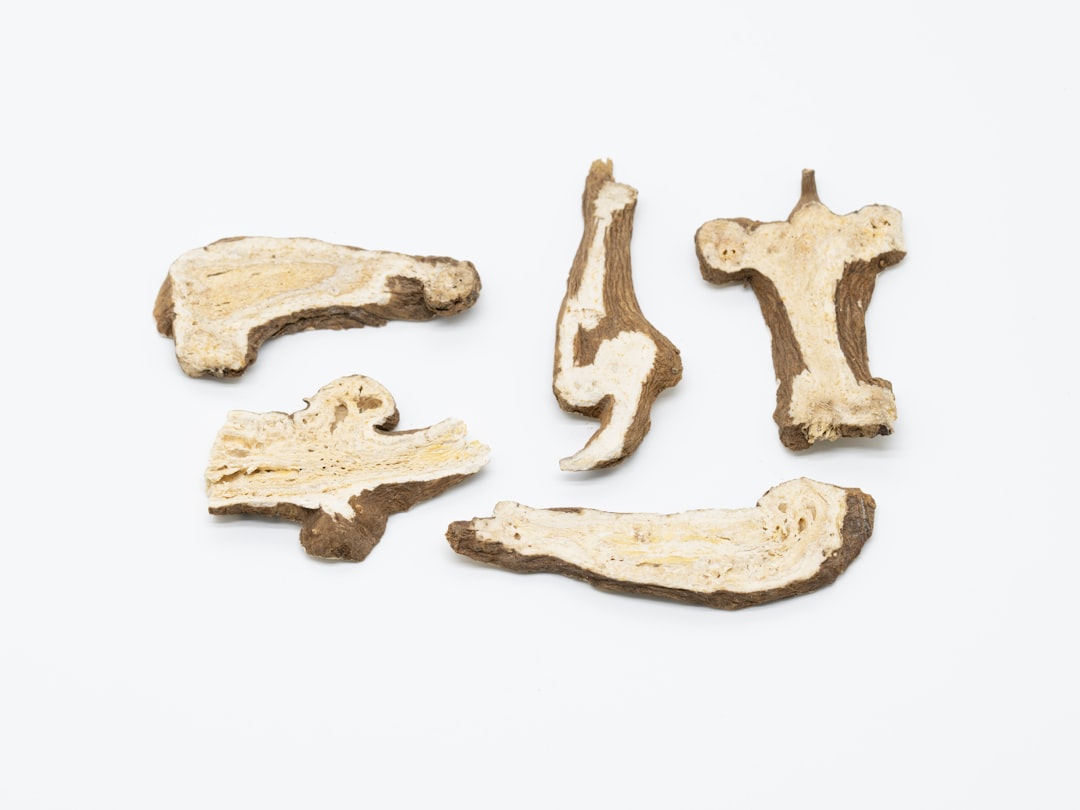
Dried Astragalus root (Huang Qi) — the chief herb in Yu Ping Feng San. Photo: Unsplash
Yu Ping Feng San, the jade windscreen formula, ranks among the most enduring classical Chinese immune formulas. For centuries, practitioners have relied on it to build wei qi — the body’s surface defence — and shield against wind invasion.
In fact, the name says everything. “Yu Ping Feng” means jade windscreen in Chinese. Imagine a dense, smooth jade screen placed at the entrance to a home, keeping wind and cold from entering. In classical Chinese medicine, wind carries pathogens into the body through the skin and the surface tissue. This formula builds that screen.
The concept behind the formula connects to one of the oldest principles in Chinese medicine: zhi wei bing — treating disease before it arises. The Huang Di Nei Jing, the foundational classical text, describes wei qi as the body’s first line of defence. When wei qi is abundant, pathogens cannot penetrate. When wei qi is deficient, the body becomes open and vulnerable. Yu Ping Feng San addresses that deficiency directly.
Wei Yi-Lin first recorded the formula in Shi Yi De Xiao Fang (Efficacious Remedies, circa 1345 AD). However, it draws on much older principles. For this reason, it holds a central place in the classical TCM materia medica for immune tonification and remains one of the most frequently prescribed formulas in clinical practice today.
Three Herbs, One Shield: What Goes Into the Formula
Three herbs make up Yu Ping Feng San. Each plays a specific role in the formula’s architecture:
- Huang Qi (Astragalus membranaceus, radix) — the chief herb. It tonifies Lung and Spleen qi, then lifts that qi outward to reinforce the body’s surface. Huang Qi ranks among the most closely studied herbs in the Chinese materia medica, with a rich body of research supporting its immune-modulating activity.
- Bai Zhu (Atractylodes macrocephala, rhizoma) — the deputy. It strengthens Spleen qi, the root source of all qi production in the body. Without strong Spleen qi, there is no raw material to generate a firm surface defence.
- Fang Feng (Saposhnikovia divaricata, radix) — the assistant. Its name means “guard against wind.” It disperses wind from the surface while Huang Qi simultaneously strengthens it. This pairing defends without depleting — a precise balance that sets this formula apart from simpler immune approaches.
Ultimately, the formula’s elegance lies in this balance. Huang Qi stabilizes and fills. Fang Feng opens and clears. Bai Zhu anchors the interior. Together, they address the root — deficient wei qi — rather than just the surface symptom of repeated illness.
In practice, the jade windscreen formula Yu Ping Feng San suits people who catch every cold that circulates, who sweat without exertion, or who feel open and vulnerable to drafts and seasonal change. It is the formula for the person whose defence never quite holds.
Yu Ping Feng San: The Jade Windscreen Formula Properties
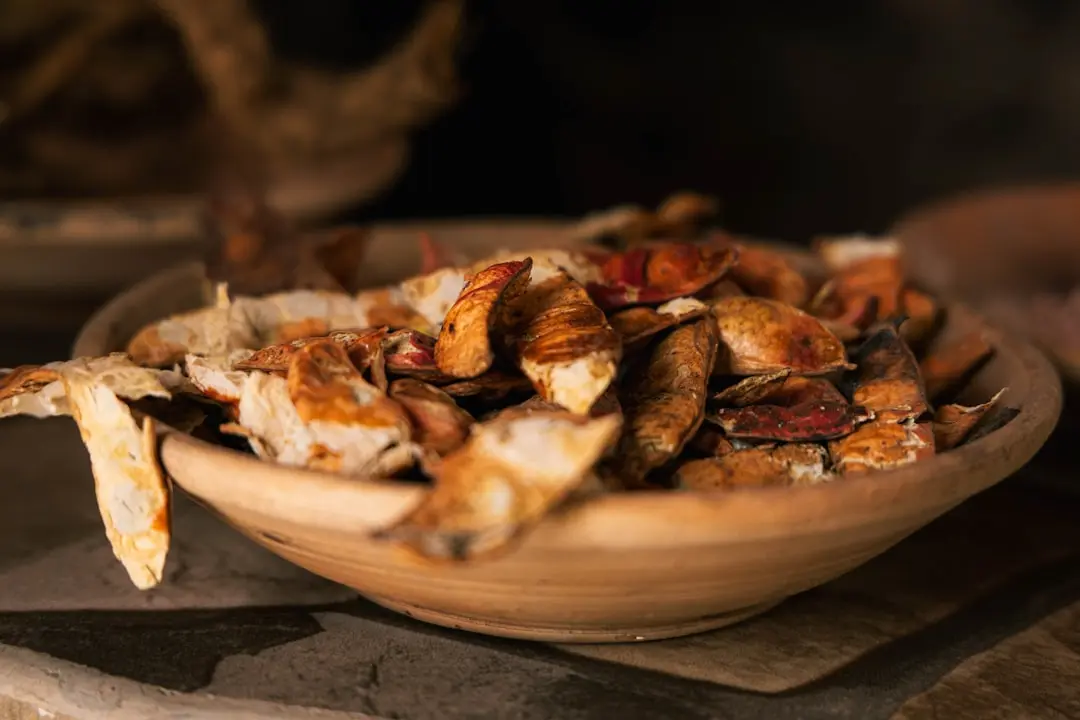
Dried herbs used in classical Chinese immune formulas. Photo: Unsplash
In Chinese medicine, wei qi is the body’s defensive energy. It circulates at the surface — in the skin and the spaces between skin and muscle. Its job: keep pathogens out and regulate sweating.
Wei Qi Deficiency: Signs and Patterns
Here’s how it works. When wei qi is strong, the body’s surface stays firm. As a result, pathogens cannot easily enter. When wei qi is weak, the surface loosens. In turn, wind and cold invade easily. Consequently, the person catches every illness that circulates.
In practice, practitioners look for several signs of wei qi deficiency:
- Frequent colds — catching nearly every virus that comes around
- Spontaneous sweating — perspiring without exertion or heat
- Strong aversion to wind and cold drafts
- Fatigue and a pale, slightly dull complexion
- Seasonal allergy symptoms with low energy and watery discharge
Yu Ping Feng San, the jade windscreen formula, targets this pattern at its root. Specifically, it works on the interior — building Spleen and Lung qi — so the body produces enough wei qi to hold the surface firm over time.
This is where it gets interesting. This is not a formula that fights infection directly. Instead, it prevents the conditions that let infection take hold in the first place. However, the distinction matters for knowing when to use it — and when not to.
What Modern Research Shows About Yu Ping Feng San
Modern research adds depth to the traditional picture. Studies on Astragalus membranaceus show its plant sugars — astragalus polysaccharides — modulate immune activity. Research links them to increased natural killer cell function and stronger antibody response. Additionally, Bai Zhu contains atractylodins, active plant compounds with anti-inflammatory properties. Fang Feng contains chromone compounds that researchers associate with reduced allergic response at the mucous membranes.
Furthermore, the formula has a long clinical history in allergy-related patterns. In TCM, seasonal allergic rhinitis often involves a wei qi deficiency presentation: sneezing triggered by wind, watery discharge, low energy, and easy susceptibility. Practitioners associate Yu Ping Feng San with this profile — the person who reacts strongly to pollen, dust, or season change, and who feels depleted alongside the allergic symptoms.
In addition, spring is when this pattern often becomes most obvious. As the Liver rises with the season, it can overact on the Spleen-Stomach, weakening Spleen qi. As a result, wei qi production drops. For people prone to this pattern, the jade windscreen formula Yu Ping Feng San serves as a tonic bridge through the seasonal shift. It rebuilds the surface before the next challenge arrives.
The key takeaway: this formula works best as a preventive tool. It strengthens what is weak before illness has a chance to take hold — exactly the principle of zhi wei bing that defines classical preventive medicine in Chinese practice.
How to Use Yu Ping Feng San Tincture
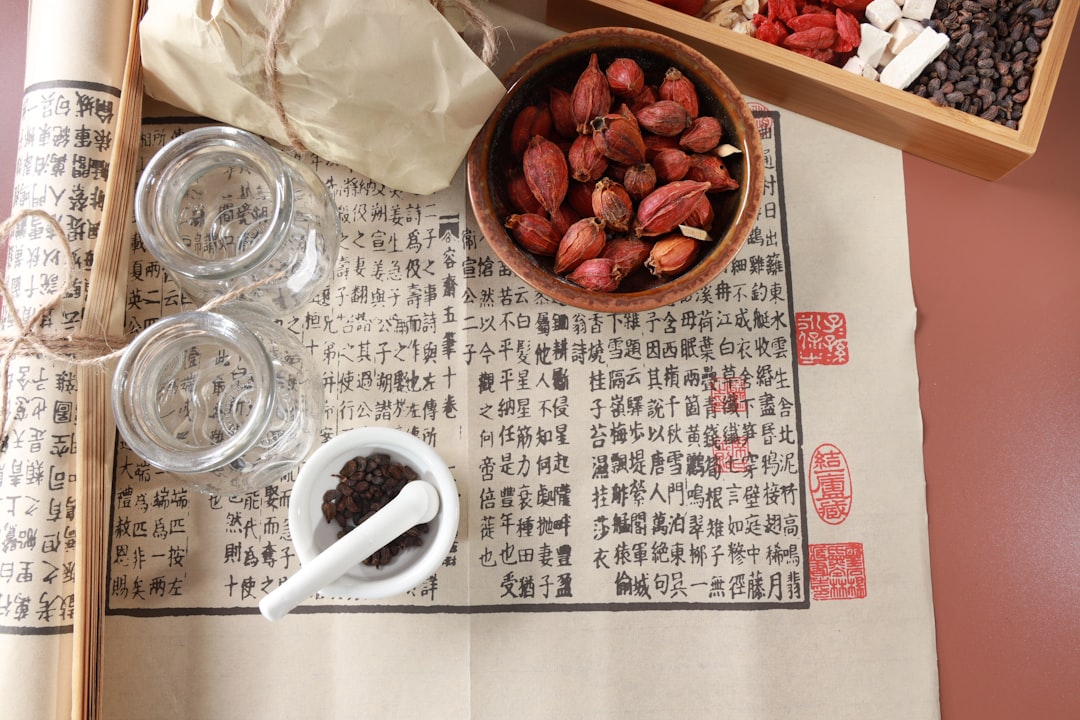
Classical Chinese herbal medicine. Photo: Unsplash
Herbal Clinic carries Yu Ping Feng San as a liquid tincture. We extract the three herbs — Astragalus, White Atractylodes, and Saposhnikovia — in pharmaceutical-grade, gluten-free alcohol and reverse osmosis water. This process preserves the active plant compounds from each herb in a stable, bioavailable form.
Tinctures absorb quickly. You add the formula to water and drink it. No decoction, no simmering. Moreover, it simplifies a preparation that would traditionally require an hour of careful boiling.
Tonic Use vs. Acute Illness: Timing Matters
As a tonic formula, Yu Ping Feng San stands apart from acute immune formulas. Practitioners use it during healthy periods — between illnesses, not during them. Its role is to build the interior so the surface holds firm over time.
Most practitioners avoid it during an active cold with fever or thick discharge. In that situation, they first use an acute formula to clear the pathogen. Afterward, they return to Yu Ping Feng San to rebuild and prevent recurrence.
For prevention, many practitioners recommend this formula through season changes. Heading into fall — when increasing wind and cold challenge the surface — or through spring, when Spleen qi often dips, the jade windscreen formula Yu Ping Feng San supports the body’s transition before symptoms develop.
In general, tonic formulas work gradually. Therefore, results build over weeks or months, not days. Furthermore, the body’s defensive capacity improves steadily, rather than producing a sudden or dramatic shift.
Pairing Yu Ping Feng San with Other Formulas
Additionally, the formula pairs well with Yin Qiao San for a complete immune approach. Specifically, practitioners use Yin Qiao San at the acute stage — clearing wind-heat when a cold arrives — then return to Yu Ping Feng San for the preventive stage afterward. Together, they cover both ends of the immune picture in TCM practice.
Herbal Clinic stocks Yu Ping Feng San, the jade windscreen formula, in 100mL, 250mL, 500mL, and 1000mL sizes. Practitioners planning longer tonic courses typically choose the 250mL or 500mL. The formula contains Astragalus, White Atractylodes, and Saposhnikovia — no fillers, no additives.
As with all herbal products, consult a qualified health practitioner before use, particularly if you take medications or have an existing health condition. These statements have not been evaluated by Health Canada. This product is not intended to diagnose, treat, cure, or prevent any disease.
FAQ
- Superior Sourcing: Our herbs are sourced from all over the world to avoid seasonal fluctuations in availability, keeping herbs accessible. Our suppliers meet strict standards that ensure top quality herbs, most of which are organic, wildcrafted, sustainably grown, or grown using permaculture. We support local farmers and grow many of our own herbs.
- Superior Processing: Our tinctures are made using the classic tincturing method. The tinctures are made in a 1:5 ratio which allows for the optimal extraction of the herb. The alcohol percentage is strictly controlled depending on the herb and part of the plant that is used.
- Superior Selection: We take pride in our growing selection of over 300 individual herbs. If we don’t carry the herb you’re seeking, we can likely track it down for you.
- Superior Quality Control: Our tinctures are thoroughly tested by a third-party lab and with an organoleptic evaluation by our team of herbalists prior to final bottling.
- Superior Price: Our tinctures are more cost-effective than other tinctures on the market. With an eye towards efficiency, we keep our costs low by maintaining good relationships with our wide network of suppliers and ordering herbs in bulk quantities.
- We Care About the Environment: We repackage materials that are shipped to us (so don’t be surprised if our packages look different from time to time!). We recycle or reuse materials whenever possible. We turn the cardboard we receive from other suppliers into packing material. We donate to avoid waste to groups like Naturopaths Without Borders. Our workforce almost completely uses public transportation or bikes. We are powered using 100% renewable energy through Bullfrog Power.
- We Donate To Charity: We support many causes that make the world better. We donate a portion of our profits or products. These include charities that support environmental and natural sustainability.
Set up an online account and order through the website. If you don’t have an account and place an order, one will be created for you.
Click here to subscribe to our mailing list.
Our products are made in Toronto, Ontario, Canada by a team of Herbalists and Naturopathic Doctors. The herbs and ingredients we use to make our products are sourced both locally and globally to keep herbs accessible and sustainable.
The majority of our herbs are certified organic, sustainably wildcrafted, or come from small-scale local organic farms that do not yet have organic certification. We always do our best to provide organic herbs in your formulas. We work with a variety of suppliers to keep costs low.
Although most of our products do not contain gluten, we do not have gluten-free certification for our production facility. Feel free to ask about any specific products and we’ll share whatever information we have available.
For liability and regulatory reasons, we don’t make any claims as to how our herbs should be used, including dosing recommendations. Please review our disclaimer, as well as our terms and policies.