What Is Oregon Grape Root for Skin Care?
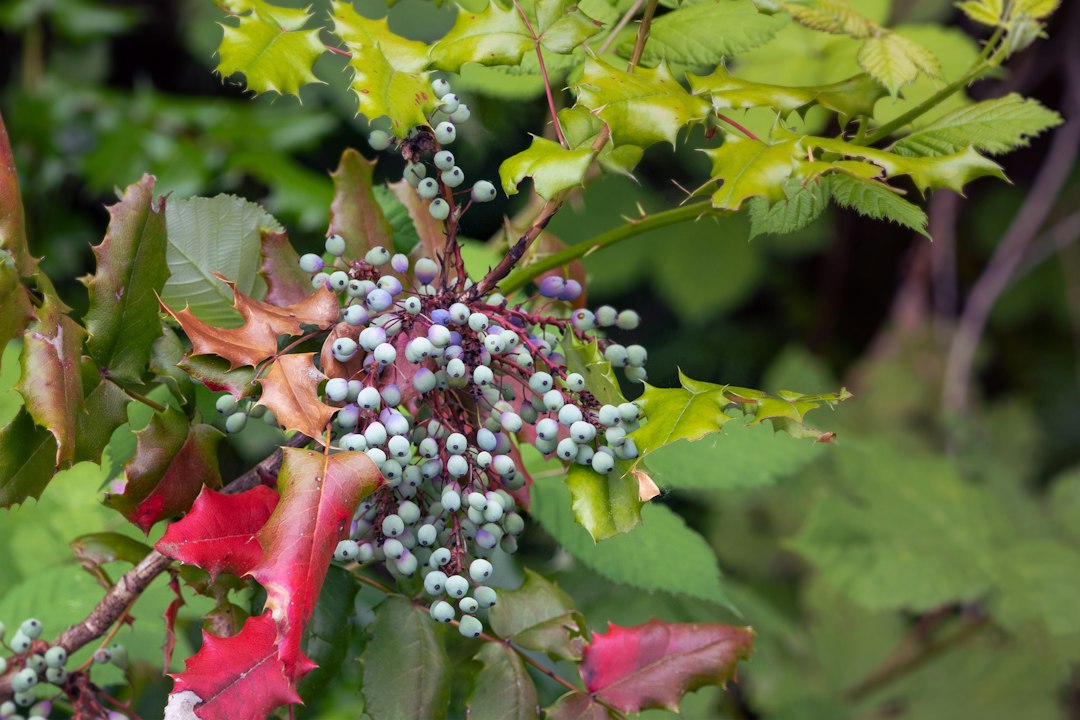
Oregon grape root for skin starts with this plant: Mahonia aquifolium and its blue berries.
Oregon grape root for skin support has a long history in North American herbalism, and it still earns a place on the shelf today. If you deal with dry, flaky, or easily irritated skin, this bitter yellow root is worth knowing about. Here’s why that matters: the same compounds that make it taste so bitter are also the reason herbalists value it.
Oregon grape (Mahonia aquifolium, also listed as Berberis aquifolium) is an evergreen shrub in the barberry family. It grows wild along the Pacific coast, from British Columbia down to northern California. Despite the name, it is not a grape at all. Instead, the common name comes from its clusters of dusty blue berries, which look a lot like small grapes.
The leaves are glossy and spiny, a bit like holly. In spring, the shrub produces bright yellow flowers. However, herbalists mostly care about what lies underground. When you cut into the root or the stem bark, the inside is a vivid yellow. That colour comes from berberine, the same alkaloid found in goldenseal and barberry.
This is where it gets interesting. Goldenseal is under pressure in the wild because of overharvesting. Oregon grape, on the other hand, grows abundantly. For that reason, many herbalists now choose it as a more sustainable berberine-rich root.
A Short History of Oregon Grape
Indigenous peoples of the Pacific Northwest used the plant in many ways. For example, they made yellow dye from the bark and ate the tart berries. They also prepared the root as a bitter tonic. Later, Eclectic physicians in the 1800s adopted it for skin complaints and sluggish digestion. As a result, Oregon grape became a staple in Western herbal practice.
So what does this mean for you? Today, many people reach for Oregon grape root for skin concerns such as dryness, redness, and rough patches. It also has a place in blends for the liver and digestion. In fact, traditional herbalists often saw these systems as linked, which we’ll look at next. You can read more about the plant’s botany on Wikipedia.
How Oregon Grape Root for Skin Works
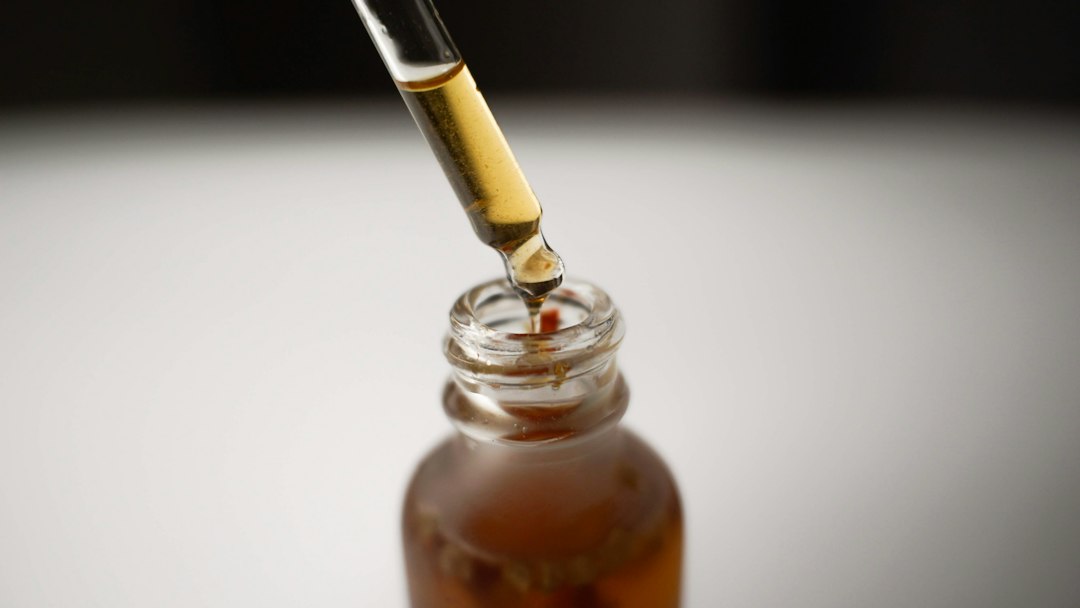
Bitter herbs like Oregon grape are most often taken as a tincture.
The best way to understand Oregon grape root for skin health is through its bitter taste. Herbalists traditionally use bitter herbs to wake up digestion. When a bitter taste hits your tongue, your body responds by releasing saliva, stomach acid, and bile. Bile helps the liver clear waste, so herbalists have long linked bitters with clearer skin.
But there’s more to it than that. The root contains several alkaloids, including berberine, berbamine, and oxyacanthine. Lab research suggests berberine has antimicrobial properties. In addition, early studies suggest extracts of the plant may calm the overactive skin cell growth seen in psoriasis. You can browse that research on PubMed.
Here’s how it works in traditional terms. Herbalists class Oregon grape as an alterative. That old word describes herbs that gradually shift the body toward better function, often through the liver, lymph, and bowels. Other alteratives include burdock root, red clover, and yellow dock. Because of this, you will often find Oregon grape blended with them.
Traditionally, herbalists associate Oregon grape with:
- Dry, scaly, or rough skin
- Occasional breakouts and redness
- Sluggish digestion and poor appetite
- Liver and gallbladder support
The key takeaway: Oregon grape root for skin support is a slow, steady approach. It is not a quick fix, and herbalists usually use it over several weeks as part of a wider routine. Also, because it contains berberine, it is not suitable for everyone. For example, avoid it during pregnancy or breastfeeding, and speak with a health professional if you take prescription medication.
How to Use Oregon Grape Root
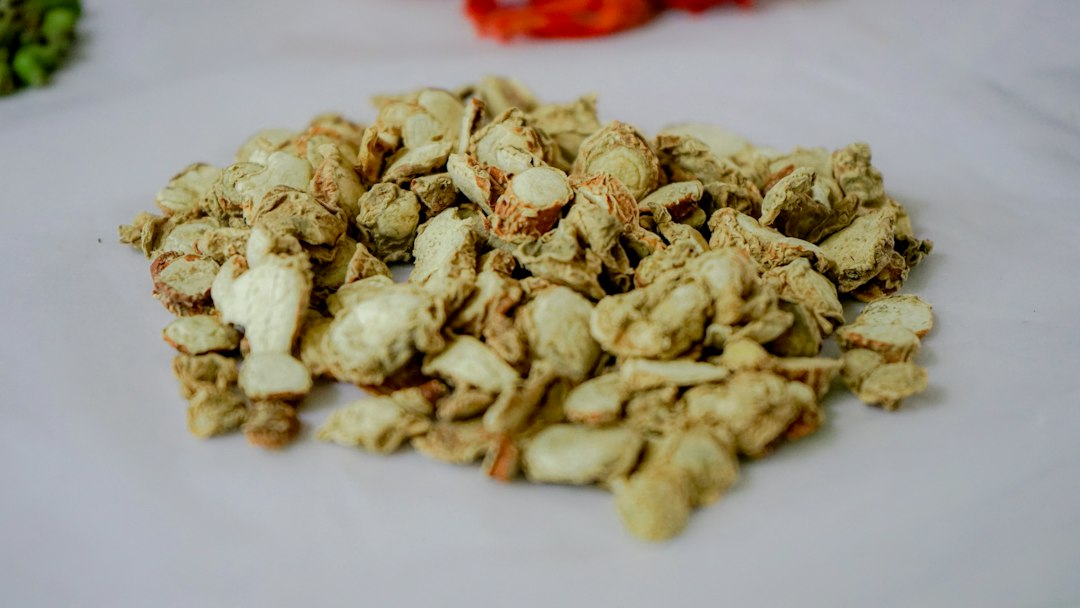
Dried root can be simmered into a strong, bitter decoction.
Most people take Oregon grape root for skin support as a tincture. A tincture is simply the herb extracted in alcohol and water. This format captures the bitter alkaloids well, and it keeps for years on the shelf. Also, a few drops in water let you actually taste the bitterness, which is part of how bitters work.
Here are a few common ways people use it:
- In water before meals. Many people take bitters shortly before eating.
- As part of a skin-focused blend. Oregon grape pairs well with burdock, red clover, or dandelion root.
- As a tea. The dried root makes a strong, bitter decoction when you simmer it for 15 to 20 minutes.
- Topically. Some herbalists add the tincture to creams or washes for rough patches.
So how do you fit it into a daily routine? First, keep it simple. Pick one time of day, such as before your largest meal, and stay consistent. Then give it time, since alterative herbs work gradually. Finally, support the herb with water, fibre, and good sleep, because skin reflects your overall health.
At Herbal Clinic, we make our Oregon grape tincture in Toronto using the classic tincturing method at a 1:5 ratio. We adjust the alcohol percentage to suit the root, so the bitter alkaloids extract fully. In addition, our herbalists taste-test every batch before bottling. As always, please check our disclaimer and talk with a qualified practitioner about whether Oregon grape root for skin care is right for you.
FAQ
- Superior Sourcing: Our herbs are sourced from all over the world to avoid seasonal fluctuations in availability, keeping herbs accessible. Our suppliers meet strict standards that ensure top quality herbs, most of which are organic, wildcrafted, sustainably grown, or grown using permaculture. We support local farmers and grow many of our own herbs.
- Superior Processing: Our tinctures are made using the classic tincturing method. The tinctures are made in a 1:5 ratio which allows for the optimal extraction of the herb. The alcohol percentage is strictly controlled depending on the herb and part of the plant that is used.
- Superior Selection: We take pride in our growing selection of over 300 individual herbs. If we don’t carry the herb you’re seeking, we can likely track it down for you.
- Superior Quality Control: Our tinctures are thoroughly tested by a third-party lab and with an organoleptic evaluation by our team of herbalists prior to final bottling.
- Superior Price: Our tinctures are more cost-effective than other tinctures on the market. With an eye towards efficiency, we keep our costs low by maintaining good relationships with our wide network of suppliers and ordering herbs in bulk quantities.
- We Care About the Environment: We repackage materials that are shipped to us (so don’t be surprised if our packages look different from time to time!). We recycle or reuse materials whenever possible. We turn the cardboard we receive from other suppliers into packing material. We donate to avoid waste to groups like Naturopaths Without Borders. Our workforce almost completely uses public transportation or bikes. We are powered using 100% renewable energy through Bullfrog Power.
- We Donate To Charity: We support many causes that make the world better. We donate a portion of our profits or products. These include charities that support environmental and natural sustainability.
Set up an online account and order through the website. If you don’t have an account and place an order, one will be created for you.
Click here to subscribe to our mailing list.
Our products are made in Toronto, Ontario, Canada by a team of Herbalists and Naturopathic Doctors. The herbs and ingredients we use to make our products are sourced both locally and globally to keep herbs accessible and sustainable.
The majority of our herbs are certified organic, sustainably wildcrafted, or come from small-scale local organic farms that do not yet have organic certification. We always do our best to provide organic herbs in your formulas. We work with a variety of suppliers to keep costs low.
Although most of our products do not contain gluten, we do not have gluten-free certification for our production facility. Feel free to ask about any specific products and we’ll share whatever information we have available.
For liability and regulatory reasons, we don’t make any claims as to how our herbs should be used, including dosing recommendations. Please review our disclaimer, as well as our terms and policies.