Part of our complete guide to classical Chinese sleep and heart formulas.
What Is Ba Zhen Tang Eight Treasures Formula?
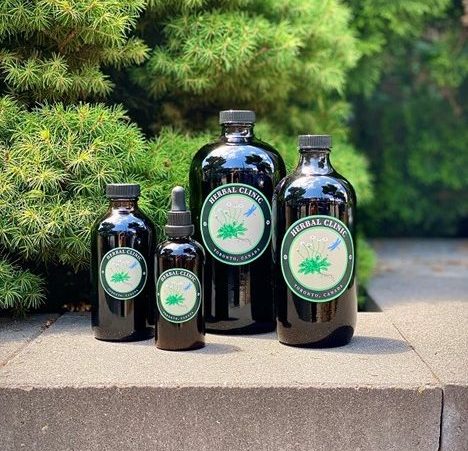
Ba Zhen Tang Eight Treasures Formula — available as a tincture at Herbal Clinic
Ba zhen tang eight treasures formula is one of classical Chinese medicine’s most complete tonics. It combines eight herbs to strengthen both qi and blood at once. If you have felt persistently fatigued, pale, or worn down after illness or surgery, herbalists have used this formula for centuries to help the body rebuild what it has lost.
The name tells you what the formula contains. “Ba zhen” means eight treasures in Mandarin. The prescription brings together two foundational sub-formulas: Si Jun Zi Tang (Four Gentlemen Decoction), which builds qi, and Si Wu Tang (Four Substances Decoction), which nourishes blood. Together, ba zhen tang eight treasures formula addresses both foundational resources in a single, balanced prescription.
The formula first appears in the classical text Rui Zhu Tang Jing Yan Fang. Notably, practitioners have used it continuously for over five centuries. In Traditional Chinese Medicine (TCM), it treats combined qi and blood deficiency. This pattern presents as persistent fatigue, pale complexion, weak digestion, and poor concentration. In TCM theory, qi and blood are interdependent. Qi moves the blood. Blood is the material foundation on which qi rests. When both run low, the body loses energy to circulate nourishment. Because of this, treating them at the same time is more effective than addressing each one separately.
The Eight Herbs
The qi-building half draws on four herbs: Korean red ginseng root (Panax ginseng), white atractylodes root (Atractylodes macrocephala), poria mushroom (Wolfiporia extensa), and honey-fried licorice root (Glycyrrhiza uralensis). In TCM, these four herbs strengthen the Spleen and Stomach. They help the body extract energy from food and produce qi. When Spleen qi weakens, digestion slows and appetite drops. Furthermore, this qi-building foundation is what helps the blood-nourishing herbs work. Without strong digestion, richer tonic herbs pass through without being absorbed.
The blood-nourishing half includes prepared rehmannia root (Rehmannia glutinosa), dong quai root (Angelica sinensis), white peony root (Paeonia lactiflora), and chuan xiong root (Ligusticum chuanxiong). These four herbs replenish, move, and circulate the blood. Rehmannia and peony provide the nourishing substance. Dong quai both nourishes and moves the blood. Chuan xiong primarily moves it, preventing stagnation as the blood rebuilds. This balance carries through into the full ba zhen tang eight treasures formula.
Additionally, Herbal Clinic’s preparation includes smoked jujube berry (Ziziphus jujuba) and ginger root (Zingiber officinale). In classical prescribing, this pair protects the digestive system and improves absorption of the tonic herbs. Ginger warms the Spleen yang — the active digestive energy. Indeed, these two herbs are not incidental additions. They are why ba zhen tang eight treasures formula remains well-tolerated even in people with weak digestion.
How Ba Zhen Tang Eight Treasures Formula Supports the Body
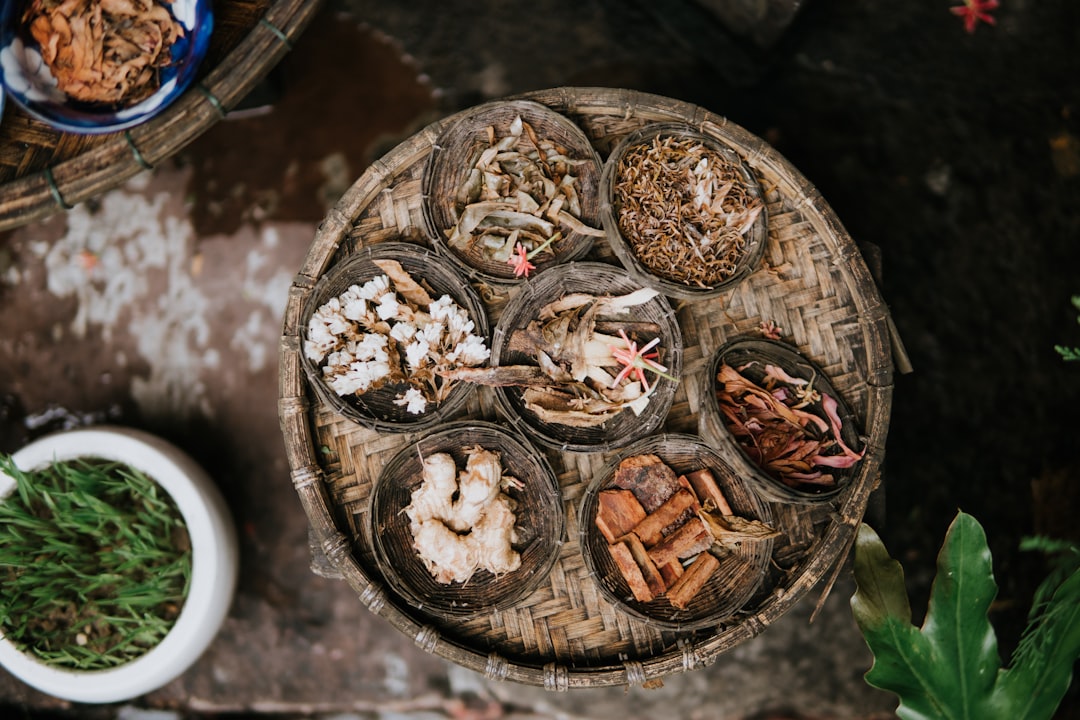
The eight core herbs in this formula address qi and blood deficiency together
Ba zhen tang eight treasures formula addresses two of the most common patterns in traditional Chinese medicine: qi deficiency and blood deficiency. Because these two patterns so often appear together, treating them at the same time produces better results than targeting each one separately.
Here’s why that matters: when qi is weak, the digestive system struggles to extract energy from food. This creates a cycle. Less qi produces less blood. Less blood nourishes the organs less effectively, which further depletes qi. The eight herbs in this formula break that cycle at both ends.
Blood Deficiency: Pallor, Fatigue, and Menstrual Health
Blood deficiency in TCM presents as pallor — pale face, pale lips, pale nail beds. It also brings dizziness on standing, mild palpitations, restless sleep, and poor concentration. Moreover, the blood nourishes the sense organs and calms the mind. When it runs low, both body and mind lose their grounding.
Dong quai (Angelica sinensis) is one of the most studied blood-nourishing herbs in the Chinese pharmacopoeia. Research suggests its ferulic acid plant compounds may support circulation and iron metabolism. Clinical data are still early-stage. However, herbalists have relied on dong quai for blood deficiency patterns for centuries. In combination with rehmannia, peony, and chuan xiong, it rebuilds the blood and keeps it moving.
Qi Deficiency: Energy and Stamina
Qi deficiency presents as persistent tiredness that rest alone does not resolve. Other signs include a weak voice, poor appetite, and a tendency to catch colds easily. The Four Gentlemen herbs — ginseng, atractylodes, poria, and licorice — strengthen the Spleen qi. They improve the body’s capacity to generate energy from food. Research on Panax ginseng suggests it supports cellular energy production through effects on mitochondrial activity. Most studies, however, use standardized extracts rather than full formula context.
Si Wu Tang — the blood-building half of ba zhen tang eight treasures formula — has a long history of use for menstrual conditions in TCM. Blood deficiency is a common root cause of scanty periods, delayed cycles, and pale menstrual blood. Herbalists have used ba zhen tang eight treasures formula for postpartum recovery for centuries. Specifically, childbirth involves significant blood loss and physical depletion. In addition, poria mushroom (Wolfiporia extensa) has a traditional role as a mind-calming herb. It helps settle the nervous system when qi runs low — directly addressing the restlessness and poor sleep that often accompany blood deficiency.
Recovery and Convalescence
Any prolonged illness, surgery, or injury depletes both qi and blood. As a result, practitioners use ba zhen tang eight treasures formula as a restorative tonic in convalescence. They typically recommend it over several weeks to months to help the body rebuild its reserves.
But there’s more to it than that. The ginger and jujube serve a specific clinical purpose. A depleted body often has weak digestion. Including digestive support in the same formula ensures the tonic herbs get absorbed rather than passing through. Every herb earns its place — including the ones that support the others.
In summary, ba zhen tang eight treasures formula works broadly. It supports anyone whose energy and vitality have depleted through overwork, illness, or the demands of reproduction. It does so by rebuilding the foundational resources the body needs to regulate itself. For a related formula that addresses qi and blood deficiency with an emphasis on the Heart, see our guide to Suan Zao Ren Tang for sleep and anxiety.
How to Use Ba Zhen Tang Eight Treasures Formula
Ba Zhen Tang is available as a 1:5 tincture in four sizes
Herbal Clinic carries ba zhen tang eight treasures formula as a concentrated liquid tincture. It uses a 1:5 extraction ratio and 30–50% pharmaceutical-grade alcohol. Each millilitre contains the equivalent of 200 mg of the combined herb blend. This makes the formula ready to use — no simmering or preparation required.
In classical TCM practice, ba zhen tang was prepared as a decoction. Dried herbs simmered in water for 30 to 45 minutes, then strained and taken warm. For most people today, a concentrated tincture achieves comparable results with far less effort.
Tincture Format and What to Expect
Here’s how it works: tinctures draw out both water-soluble and alcohol-soluble active parts from the herbs. The key active parts in this formula — the ginsenosides in ginseng, the ferulic acid in dong quai, the paeoniflorin in white peony — dissolve well in a water-alcohol solvent. As a result, a well-made 1:5 tincture captures a broad range of the formula’s activity.
Ba zhen tang eight treasures formula works best as a longer-term tonic. In clinical practice, practitioners recommend it over several weeks to months. Qi and blood deficiency patterns develop gradually and reverse the same way. Consistency matters more than any single dose.
In practice, most people report gradual improvements in energy, colour, and overall resilience after several weeks of use. However, results vary depending on the severity of the deficiency, its cause, and whether sleep, diet, and stress are also being addressed.
Additionally, many classical texts recommend taking tonic formulas with warm water rather than cold. A warm digestive system receives tonic herbs more readily. Warming the preparation aligns with the classical guidance that strong nourishing herbs work best alongside digestive warmth.
The tincture is available in four sizes at Herbal Clinic: 100 mL, 250 mL, 500 mL, and 1000 mL. For longer-term use, the larger sizes offer better value per dose.
Sourcing and Quality
Herbal Clinic sources all eight core herbs to meet strict quality standards. Each batch undergoes sensory evaluation by our team before bottling — checked by taste, smell, and colour to verify the herbs are correct and potent. The formula follows classical proportions, with ginger and jujube added to support absorption. For published research on ba zhen tang, the PubMed database indexes relevant clinical and preclinical studies.
Most importantly, ba zhen tang eight treasures formula is a tonic best matched to a clear clinical picture. For guidance on whether this formula fits your situation, consult a trained TCM practitioner or naturopathic doctor.
These statements have not been evaluated by Health Canada. This product is not intended to diagnose, treat, cure, or prevent any disease.
FAQ
- Superior Sourcing: Our herbs are sourced from all over the world to avoid seasonal fluctuations in availability, keeping herbs accessible. Our suppliers meet strict standards that ensure top quality herbs, most of which are organic, wildcrafted, sustainably grown, or grown using permaculture. We support local farmers and grow many of our own herbs.
- Superior Processing: Our tinctures are made using the classic tincturing method. The tinctures are made in a 1:5 ratio which allows for the optimal extraction of the herb. The alcohol percentage is strictly controlled depending on the herb and part of the plant that is used.
- Superior Selection: We take pride in our growing selection of over 300 individual herbs. If we don’t carry the herb you’re seeking, we can likely track it down for you.
- Superior Quality Control: Our tinctures are thoroughly tested by a third-party lab and with an organoleptic evaluation by our team of herbalists prior to final bottling.
- Superior Price: Our tinctures are more cost-effective than other tinctures on the market. With an eye towards efficiency, we keep our costs low by maintaining good relationships with our wide network of suppliers and ordering herbs in bulk quantities.
- We Care About the Environment: We repackage materials that are shipped to us (so don’t be surprised if our packages look different from time to time!). We recycle or reuse materials whenever possible. We turn the cardboard we receive from other suppliers into packing material. We donate to avoid waste to groups like Naturopaths Without Borders. Our workforce almost completely uses public transportation or bikes. We are powered using 100% renewable energy through Bullfrog Power.
- We Donate To Charity: We support many causes that make the world better. We donate a portion of our profits or products. These include charities that support environmental and natural sustainability.
Set up an online account and order through the website. If you don’t have an account and place an order, one will be created for you.
Click here to subscribe to our mailing list.
Our products are made in Toronto, Ontario, Canada by a team of Herbalists and Naturopathic Doctors. The herbs and ingredients we use to make our products are sourced both locally and globally to keep herbs accessible and sustainable.
The majority of our herbs are certified organic, sustainably wildcrafted, or come from small-scale local organic farms that do not yet have organic certification. We always do our best to provide organic herbs in your formulas. We work with a variety of suppliers to keep costs low.
Although most of our products do not contain gluten, we do not have gluten-free certification for our production facility. Feel free to ask about any specific products and we’ll share whatever information we have available.
For liability and regulatory reasons, we don’t make any claims as to how our herbs should be used, including dosing recommendations. Please review our disclaimer, as well as our terms and policies.