Red Raspberry Leaf for Uterine Health: The Herb Behind the Tonic Tea
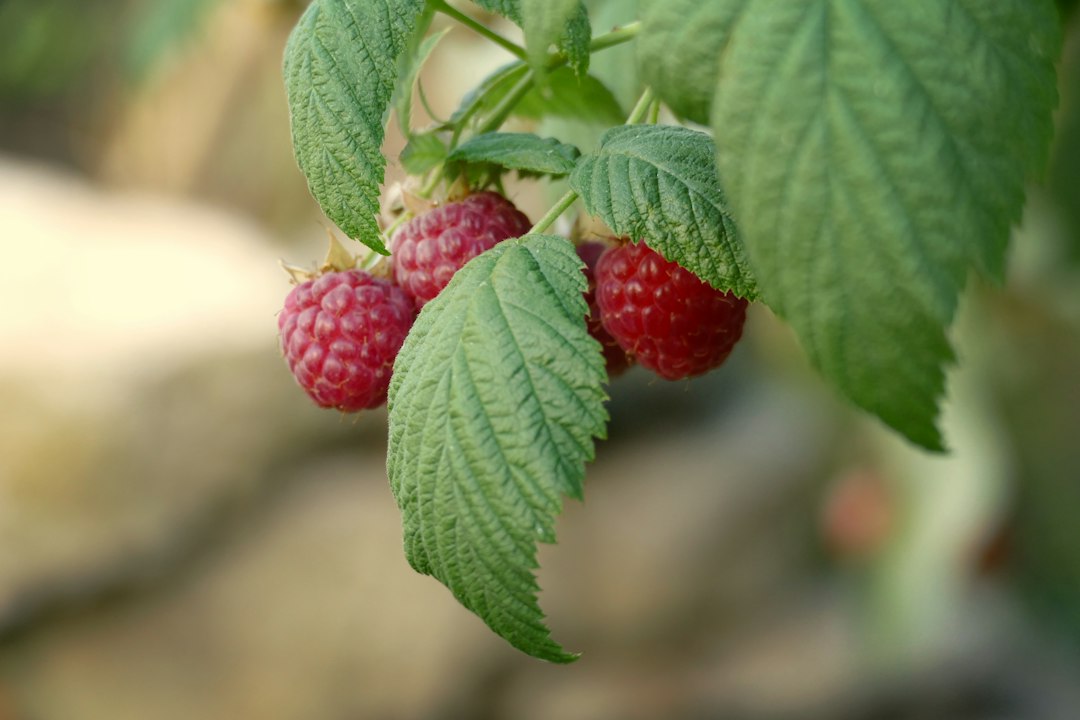
Rubus idaeus, the common red raspberry. Herbalists use the leaf, not the fruit.
Red raspberry leaf for uterine health is one of the oldest entries in the Western herbal record, and it earned that spot by being mild enough to drink daily. Midwives and country herbalists kept it in the cupboard year round. Today it still shows up in more women’s tonic teas than almost any other plant.
The plant is Rubus idaeus, a member of the rose family (Rosaceae) and the same bramble that gives us the summer fruit. However, herbalists use the leaf, not the berry. You will also see it sold simply as raspberry leaf or red raspberry leaf.
Here is what it looks like: a woody, arching cane covered in fine prickles, carrying compound leaves of three to five toothed leaflets. The undersides are noticeably pale, almost silver grey, which is the quickest way to tell raspberry from blackberry in the field. Small white five petalled flowers appear in late spring. Furthermore, the canes spread by root suckers, so one plant becomes a patch within a few seasons.
Rubus idaeus grows wild across Europe, northern Asia, and much of temperate North America. Consequently it thrives in hedgerows, forest clearings, and old logging cuts, anywhere the soil has been disturbed and the light gets in. Harvesters pick the leaves before the fruit sets, while the tannin content sits at its peak and the leaf is still clean.
Traditional Uses of Raspberry Leaf
Traditional use runs in two directions. In addition to the women’s tonic reputation, European herbalists used the leaf as a plain astringent: a gargle for sore throats, a wash for minor cuts, and a tea for loose bowels. Both uses trace back to the same chemistry, which we cover in Part 2.
The key takeaway: red raspberry leaf built its reputation on being unremarkable in the best sense. It tastes like black tea without the caffeine, it works slowly, and people have consumed it in quantity for centuries. That combination is rarer than it sounds. Browse our women’s health herbs to see where it sits alongside the rest of the category.
What Red Raspberry Leaf for Uterine Health Actually Does
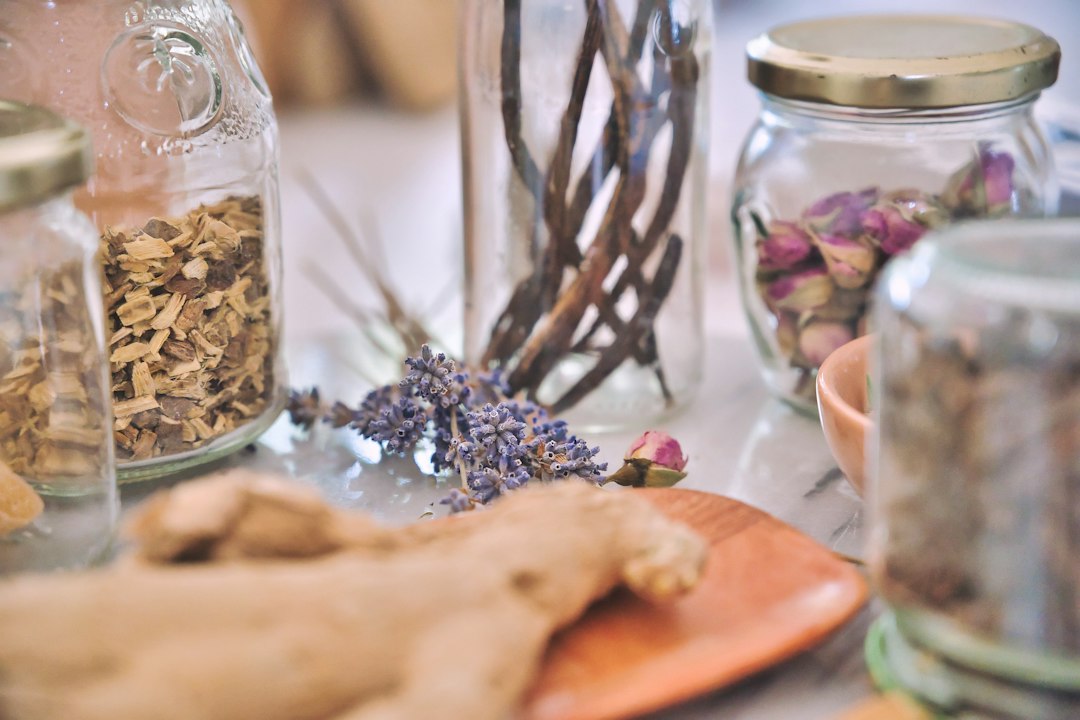
Dried leaf keeps its astringency well when stored away from light.
Red raspberry leaf rests on a short and honest constituent list: flavonoids and tannins. That is it. There is no exotic marker compound, no patented extract ratio, and no headline trial. Here is why that matters: the effects people report are the effects tannins and flavonoids produce, and those are well understood.
Tannins and Astringency
Tannins are astringent. In plain terms, they bind to proteins in the surface layer of tissue and draw it tighter. Consequently a strong raspberry leaf infusion tones and firms whatever it touches, which is why the same tea serves as a throat gargle and as a remedy for loose stools. Herbalists traditionally extended that logic inward, reaching for the leaf where smooth muscle and mucous membrane had gone slack.
Uterine Weakness and Smooth Muscle
The classical indication is uterine weakness. Traditionally, practitioners associated red raspberry leaf for uterine health with toning uterine and smooth muscle tissue rather than stimulating it. This is where it gets interesting: researchers have looked at a relaxant effect on uterine smooth muscle alongside the astringent one, and the older literature describes the leaf as normalising rather than pushing in a single direction. Modern evidence remains thin and mostly preliminary, so we hold it loosely.
Flavonoids contribute the antioxidant side. Additionally, the leaf carries a modest mineral load, which is part of why herbalists have long combined it with nettle leaf and blackstrap molasses in nourishing tonic teas. The mineral content is not dramatic, but it adds up over daily use.
Beyond the uterine association, tradition credits the leaf with two secondary actions: alterative, meaning it supports the body’s ordinary channels of elimination, and diuretic, meaning it gently increases urine output. Neither is strong. Both fit the picture of a mild, cumulative tonic rather than an acute remedy.
Safety Notes and Pregnancy
But there is more to it than that. A word on caution: raspberry leaf is one of the most common herbs in pregnancy teas, and it is also one where opinion genuinely divides. Our disclaimer applies in full, and anyone pregnant or breastfeeding should speak with a practitioner first. See the red raspberry leaf product page for sourcing detail.
How to Use Red Raspberry Leaf for Uterine Health
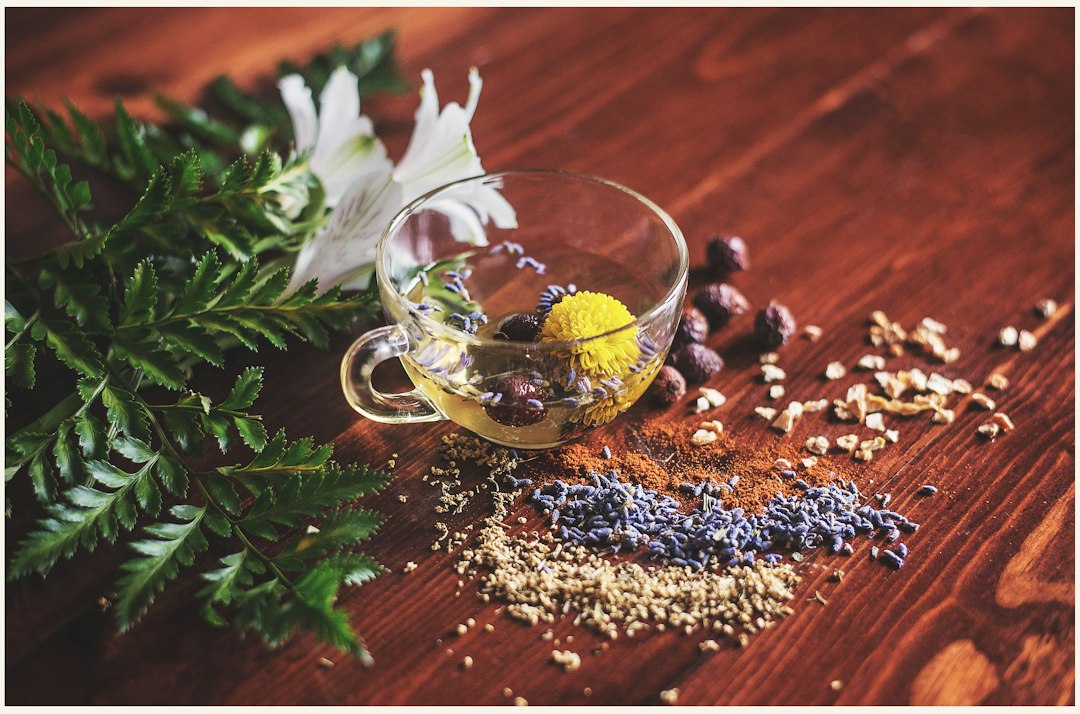
A covered ten to fifteen minute steep keeps the volatile fraction in the cup.
People take red raspberry leaf for uterine health two ways: as an infusion, or as a tincture. Both work. They simply suit different habits.
Raspberry Leaf as a Tea
Tea is the traditional route and still the most popular. The leaf holds up well to a long steep, and because it tastes like mild black tea, most people drink it without sweetening. Traditionally the daily amount falls in the range of 4 to 8 grams of dried leaf. Pour just boiled water over the leaf, cover the cup, and let it sit for ten to fifteen minutes. Covering matters, since it keeps the volatile fraction in the cup instead of the air.
Raspberry Leaf as a Tincture
Tincture suits people who want the herb without the ritual. Traditional daily amounts run between 6 and 12 mL. In addition, a tincture travels, keeps for years, and blends easily with other extracts, which is why it forms the usual base for custom women’s formulas.
So what does this mean for you? If you like the routine of a daily cup, and you want the minerals that come with a long infusion, choose the tea. If you want consistency and speed, choose the tincture. Plenty of people do both, drinking the tea at home and carrying the tincture.
Raspberry leaf also combines well. The classic pairing is nettle leaf (Urtica dioica folia) with a spoon of blackstrap molasses, a blend used as a nourishing daily tonic. Furthermore, it sits comfortably alongside cramp bark or chaste tree berry in women’s formulas.
How We Prepare Red Raspberry Leaf
Here is how we prepare it. We make our red raspberry leaf tincture by the classic method at a 1:5 ratio, and we set the alcohol percentage for a leaf and its tannin profile rather than applying one blanket house standard. We source the leaf from organic and sustainably grown suppliers. Our herbalists run an organoleptic check on every batch before final bottling, and third party lab testing backs that up. As a result, the tea and the tincture taste the same year to year.
The key takeaway: start low, take it regularly, and give it weeks rather than days. Tonics do not announce themselves.
FAQ
- Superior Sourcing: Our herbs are sourced from all over the world to avoid seasonal fluctuations in availability, keeping herbs accessible. Our suppliers meet strict standards that ensure top quality herbs, most of which are organic, wildcrafted, sustainably grown, or grown using permaculture. We support local farmers and grow many of our own herbs.
- Superior Processing: Our tinctures are made using the classic tincturing method. The tinctures are made in a 1:5 ratio which allows for the optimal extraction of the herb. The alcohol percentage is strictly controlled depending on the herb and part of the plant that is used.
- Superior Selection: We take pride in our growing selection of over 300 individual herbs. If we don’t carry the herb you’re seeking, we can likely track it down for you.
- Superior Quality Control: Our tinctures are thoroughly tested by a third-party lab and with an organoleptic evaluation by our team of herbalists prior to final bottling.
- Superior Price: Our tinctures are more cost-effective than other tinctures on the market. With an eye towards efficiency, we keep our costs low by maintaining good relationships with our wide network of suppliers and ordering herbs in bulk quantities.
- We Care About the Environment: We repackage materials that are shipped to us (so don’t be surprised if our packages look different from time to time!). We recycle or reuse materials whenever possible. We turn the cardboard we receive from other suppliers into packing material. We donate to avoid waste to groups like Naturopaths Without Borders. Our workforce almost completely uses public transportation or bikes. We are powered using 100% renewable energy through Bullfrog Power.
- We Donate To Charity: We support many causes that make the world better. We donate a portion of our profits or products. These include charities that support environmental and natural sustainability.
Set up an online account and order through the website. If you don’t have an account and place an order, one will be created for you.
Click here to subscribe to our mailing list.
Our products are made in Toronto, Ontario, Canada by a team of Herbalists and Naturopathic Doctors. The herbs and ingredients we use to make our products are sourced both locally and globally to keep herbs accessible and sustainable.
The majority of our herbs are certified organic, sustainably wildcrafted, or come from small-scale local organic farms that do not yet have organic certification. We always do our best to provide organic herbs in your formulas. We work with a variety of suppliers to keep costs low.
Although most of our products do not contain gluten, we do not have gluten-free certification for our production facility. Feel free to ask about any specific products and we’ll share whatever information we have available.
For liability and regulatory reasons, we don’t make any claims as to how our herbs should be used, including dosing recommendations. Please review our disclaimer, as well as our terms and policies.