Part 1: What Is Calendula Herb and Why Is It Used for Skin Healing?
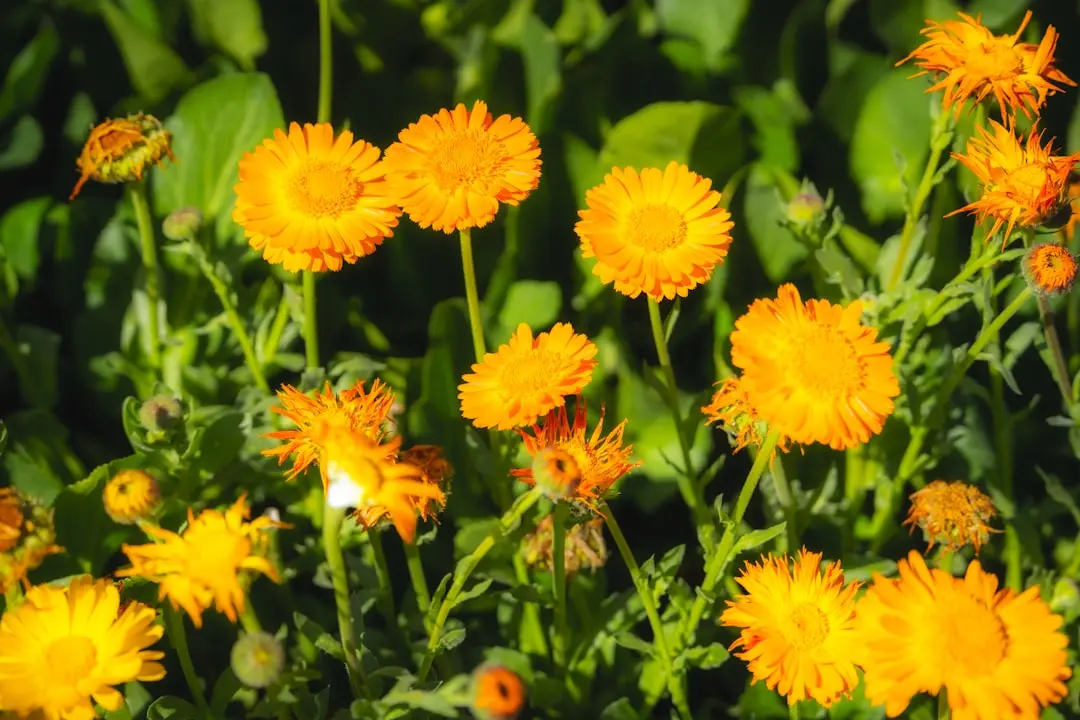
Calendula herb for skin healing is one of the most trusted tools in Western herbalism. Calendula officinalis — known as pot marigold — belongs to the daisy family. Its bright orange flowers have served as a healing herb for thousands of years. Additionally, it works just as well inside the body as it does on the skin.
The name calendula comes from the Latin calendae, meaning “first day of the month.” This refers to its near-constant flowering habit. Native to the Mediterranean, it now grows in gardens across the world. It even thrives in Canadian climates.
A Healing Tradition That Spans Thousands of Years
Ancient Egyptians, Romans, and Greeks all prized calendula as a wound herb. Medieval herbalists relied on it for skin complaints and fevers. By the 1800s, it was a home remedy across Europe and North America. In addition, German folk medicine added dried petals to winter soups as a warming tonic.
Calendula also holds deep meaning in many cultures. In Mexico, it plays a key role in Día de los Muertos. In India, marigold garlands appear at religious events. These traditions show how widely people have valued this plant.
What Does Calendula Look Like and Where Does It Grow?
Calendula grows as a bushy annual. It reaches 30 to 60 cm tall. The flowers range from pale yellow to deep orange. They bloom all through the growing season. Furthermore, the leaves are lance-shaped, slightly sticky, and lightly scented.
At Herbal Clinic in Toronto, we source Calendula officinalis flowers to strict standards. Most carry organic status or come from farms that grow with care. We support local Canadian growers as part of our wider network. Calendula is a healing herb with a long history of skin repair — and we treat it with that respect.
Part 2: Calendula Herb Benefits — Skin Healing Properties and Active Compounds
Herbalists value calendula herb most for skin healing. It has two core actions. First, it is wound-healing — herbalists call this a vulnerary. Second, it is soothing and coating — they call this a demulcent. Together, these make it one of the most useful herbs in Western practice.
How Calendula Herb Heals Skin — Two Key Actions
A wound-healing herb helps the body repair its own tissue. Calendula does this on the skin and inside the gut lining. Herbalists link it to support for:
- Minor cuts, scrapes, and slow-healing skin
- Dry or irritated skin conditions
- Sunburn and damaged skin
- Gut wall support and digestive comfort
- Mouth sores and inflamed gums — used as a rinse
Because it is also a demulcent, calendula coats and calms sore tissue. As a result, it helps both the skin and the gut at the same time.
Active Compounds in the Calendula Flower
The flower heads of Calendula officinalis hold several key compounds. In particular, mucilage drives the soothing action — it coats and calms. Additionally, the flowers contain:
- Plant antioxidants (quercetin group) — calm swelling and cell stress
- Healing plant compounds (oleanolic acid group) — linked to tissue repair
- Orange pigments (carotenoids) — studied for cell health
- Germ-fighting resins — natural defence against microbes
- Complex plant sugars — support the immune response
Research on PubMed has explored calendula’s role in wound repair. Studies suggest it may help tissue heal faster on the skin. However, these findings are early and do not make health claims.
How Calendula Fits Into a Herbal Formula
Calendula works well with other herbs. The Perfect Herbs monograph pairs it with St. John’s Wort (Hypericum perforatum), Borage (Borago officinalis), and Wood Betony (Stachys betonica) for mood support. For gut use, it pairs well with chamomile. In contrast to herbs with one use, calendula bridges both skin and gut care at once.
Part 3: How to Use Calendula Herb for Skin Healing — Tea, Tincture and Salve
You can use calendula herb for skin healing in several simple ways. Tea works well for inner gut support. Tincture is fast and easy to take each day. Topical forms work right on the skin. Each method has its own strengths.
Calendula as a Tea
To make calendula tea, steep the dried flowers in hot water. This gives a golden, mildly sweet brew. Herbalists have used this method for centuries to calm the gut lining. Furthermore, calendula blends well with chamomile (Matricaria recutita) — its closest herbal match.
Calendula as a Tincture
A tincture draws out the active compounds using alcohol. At Herbal Clinic, we make our Marigold tincture with a 1:5 method — 1 part herb to 5 parts liquid. This gives the best draw of the flower’s key compounds. We also offer an alcohol-free glycerite for those who prefer it.
We test every batch in a certified lab. Our team of herbalists and Naturopathic Doctors also checks each batch by taste and smell before bottling. This work happens right here in Toronto, Ontario.
Calendula Herb: Direct Skin Healing Uses
Calendula herb supports skin healing when you apply it directly. Infused oils, salves, and creams have served this purpose for generations. Herbalists use them for:
- Minor cuts, scrapes, and slow-healing skin
- Dry or chapped skin
- Chapped lips and cracked heels
- Sensitive baby skin — gentle and well-tolerated
- Skin recovery after sun exposure
Additionally, you can cool a strong calendula tea and use it as a skin rinse. This is a classic technique that needs no special tools.
Simple Ways to Add Calendula to Your Daily Routine
There are many easy ways to bring calendula into your day. Here are five to try:
- Morning tea: Steep dried calendula flowers as a daily ritual
- Tincture in water: Add a dropper of Marigold tincture to a glass of water
- Topical salve: Apply to dry or irritated skin as needed
- Herbal blend: Mix with chamomile for a soft, soothing daily tea
- Skin rinse: Cool a strong infusion and apply it to sore skin
We suggest consulting a herbalist or Naturopathic Doctor for personal advice. For legal reasons, Herbal Clinic does not give dosing guidance. Please see our disclaimer below.
Our Marigold tincture and dried flowers come in several sizes. Most importantly, every batch meets our strict sourcing standards — organic, grown with care, and quality-tested before sale.
Disclaimer: These statements have not been evaluated by Health Canada. This product is not intended to diagnose, treat, cure, or prevent any disease. This information is provided for educational purposes only.
Frequently Asked Questions
Superior Sourcing: Our herbs are sourced from all over the world to avoid seasonal fluctuations in availability, keeping herbs accessible. Our suppliers meet strict standards that ensure top quality herbs, most of which are organic, wildcrafted, sustainably grown, or grown using permaculture. We support local farmers and grow many of our own herbs. Superior Processing: Our tinctures are made using the classic tincturing method. The tinctures are made in a 1:5 ratio which allows for the optimal extraction of the herb. The alcohol percentage is strictly controlled depending on the herb and part of the plant that is used. Superior Selection: We take pride in our growing selection of over 300 individual herbs. If we don’t carry the herb you’re seeking, we can likely track it down for you. Superior Quality Control: Our tinctures are thoroughly tested by a third-party lab and with an organoleptic evaluation by our team of herbalists prior to final bottling. Superior Price: Our tinctures are more cost-effective than other tinctures on the market. With an eye towards efficiency, we keep our costs low by maintaining good relationships with our wide network of suppliers and ordering herbs in bulk quantities. We Care About the Environment: We repackage materials that are shipped to us. We recycle or reuse materials whenever possible. We turn the cardboard we receive from other suppliers into packing material. We donate to avoid waste to groups like Naturopaths Without Borders. Our workforce almost completely uses public transportation or bikes. We are powered using 100% renewable energy through Bullfrog Power. We Donate To Charity: We support many causes that make the world better. We donate a portion of our profits or products to charities that support environmental and natural sustainability.
Set up an online account and order through the website. If you don’t have an account and place an order, one will be created for you.
Click here to subscribe to our mailing list.
Our products are made in Toronto, Ontario, Canada by a team of Herbalists and Naturopathic Doctors. The herbs and ingredients we use to make our products are sourced both locally and globally to keep herbs accessible and sustainable.
The majority of our herbs are certified organic, sustainably wildcrafted, or come from small-scale local organic farms that do not yet have organic certification. We always do our best to provide organic herbs in your formulas. We work with a variety of suppliers to keep costs low.
Although most of our products do not contain gluten, we do not have gluten-free certification for our production facility. Feel free to ask about any specific products and we’ll share whatever information we have available.
For liability and regulatory reasons, we don’t make any claims as to how our herbs should be used, including dosing recommendations. Please review our disclaimer, as well as our terms and policies.